Category: Web Development

  • 7+ Best Shadcn sidebar examples for modern dashboards

    Sidebars are not just navigation; they define how users interact with complex UI systems. Most production dashboards built with React and Next.js use a scalable sidebar. It helps manage routing, permissions, and persistent layouts.

    We evaluated these sidebar implementations based on:

    • Component composition and reusability
    • State handling and responsiveness
    • Accessibility and keyboard navigation
    • Fit into the Real World of SaaS Dashboards

    This guide is for developers building SaaS dashboards, admin panels, or internal tools using Next.js or React. If you’re looking for a responsive retractable sidebar or deciding how to structure navigation without breaking UX at scale, this will help. You will learn which sidebar pattern fits your layout, data, and user flow.


    What is a Shadcn Sidebar?

    A Shadcn sidebar is a composable, config-driven navigation system built using shadcn/ui and Tailwind CSS. It is often used in React and Next.js admin dashboards.

    It is not just a visual navigation vertical panel. It acts as a persistent layout boundary, a route-aware state layer, and often an RBAC filtering surface. In production SaaS apps, the sidebar directly affects scalability, rendering performance, layout persistence, and how cleanly we can separate navigation logic from presentation components.

    For developers seeking ready-made components and structured patterns, explore curated Shadcn UI libraries to accelerate the development of scalable dashboards.

    Before choosing or implementing a sidebar pattern, developers should evaluate architectural constraints. Such as navigation depth, expected item scale, responsiveness strategy, and whether routing and role logic are static or dynamic. 

    Most scalable implementations follow a config-first structure in which navigation is stored as structured data, mapped to UI components, highlighted via the router’s pathname, and wrapped in a shared layout to avoid duplication. The table below combines strategic questions with implementation principles to help you make an architecture-level decision rather than just a UI choice.


    How the Shadcn sidebar works in a Next.js App

    In a typical Next.js App Router setup:

    app/
    ├─ (dashboard)/
    │   ├─ layout.tsx
    │   ├─ page.tsx

    The sidebar lives inside layout.tsx, ensuring it persists across route changes. Navigation is usually defined in a config file and mapped to sidebar components dynamically. This avoids duplication and keeps routing logic centralized.

    Sidebar architecture decision matrix

    DimensionDecision PointRecommended ApproachArchitectural Impact
    Navigation DepthFlat vs Multi-levelUse nested config with children[] and recursive renderingAffects expand state logic and active path propagation
    Scalability10 vs 50+ itemsConfig-driven JSON/TS structurePrevents JSX bloat and improves maintainability
    State ManagementFixed vs CollapsibleStore collapse state in global store (Context/Zustand)Avoids full layout re-renders
    Route HighlightingActive route handlingUse usePathname() and normalized path matchingEnables parent auto-expansion and accurate highlighting
    RBAC / Dynamic NavStatic vs Role-basedFilter navigation config before renderKeeps UI components pure and reusable
    ResponsivenessDesktop-only vs Mobile-firstImplement drawer pattern with shared nav configPrevents logic duplication across breakpoints
    Layout PersistencePer-page vs Shared layoutWrap pages inside dashboard layoutEnsures sidebar does not unmount on navigation
    ReusabilitySingle app vs Multi-app systemExport navigation config as reusable moduleEnables cross-product consistency
    Separation of ConcernsLogic vs UI couplingMap config → Sidebar components declarativelyImproves testability and scalability

    This matrix helps teams choose a sidebar pattern based on application complexity rather than visual preference. In large SaaS systems, navigation architecture affects performance, maintainability, and developer velocity over time.


    Best Sidebar Sidebar Examples

    When implementing these shadcn sidebar patterns, memoise navigation trees, avoid inline functions in maps, and ensure keyboard accessibility with focus management and aria attributes.

    Admin Dashboard Sidebar

    Admin Dashboard Sidebar

    A navigation system with nested routes and grouped menus, scaled fully into multi-layer dashboards, addresses complex information architecture problems without overwhelming users. In any sidebar-supported navigation pattern, icons are available for all nodes, and sections can be collapsed.

    This system is designed for applications where deep hierarchies are more important than simplicity. Moreover, it is a free and open-source shadcn sidebar with Figma design.

    Key features:

    • Multi-level navigation with collapsible groups
    • Icon + label mapping for quick scanning
    • Ideal for RBAC-based dashboards
    • Works well with layout persistence

    Best for: SaaS analytics dashboards, CRM systems


    Mini Sidebar Navigation

    Mini Sidebar Navigation

    A collapsed-first sidebar that prioritizes screen real estate while keeping navigation accessible through icons. Expands on interaction, making it suitable for dense dashboards where content space is critical. Reduces visual noise without sacrificing usability.

    Key features:

    • Icon-only default with hover/expand behavior
    • Space-efficient layout for data-heavy screens
    • Smooth transition states
    • Minimal cognitive load

    Best for: Trading dashboards, data visualization apps


    Two Column Sidebar

    Two Column Sidebar

    Splits navigation into primary and secondary layers, improving hierarchy and reducing clutter. The first column handles top-level sections, while the second dynamically updates based on selection. Helps structure large apps without deep nesting.

    Key features:

    • Dual-layer navigation system
    • Context-aware secondary menu
    • Reduces deep nesting issues
    • Better discoverability of features

    Best for: Enterprise tools, project management platforms


    Compact Dashboard Navigation

    Compact Dashboard Navigation

    A tighter, optimized version of a traditional sidebar that balances readability with space usage. Maintains labels but reduces padding and spacing for higher information density. Works well when you need both clarity and efficiency.

    Key features:

    • Reduced spacing without hurting usability
    • Optimized for medium-density dashboards
    • Clean alignment and grouping
    • Faster navigation scanning

    Best for: Internal tools, admin panels with moderate complexity


    Admin Sidebar with Promo

    Admin Sidebar with Promo

    Combines navigation with a promotional or informational section, typically used for upgrades, announcements, or feature highlights. Adds a product growth layer directly into the UI without interrupting workflows.

    Key features:

    • Embedded promo or CTA section
    • Supports feature announcements
    • Maintains navigation clarity
    • Useful for product-led growth flows

    Best for: SaaS products with upsell flows


    Shadcn Responsive Sidebar

    Shadcn Responsive Sidebar

    A mobile-first sidebar that switches among drawer, overlay, and fixed layouts based on screen size. Designed for seamless transitions across devices while maintaining consistent navigation logic. Ensures usability across breakpoints.

    Key features:

    • Drawer-based mobile navigation
    • Adaptive layout behavior
    • Touch-friendly interactions
    • Works with responsive layout systems

    Best for: Cross-device SaaS apps, mobile dashboards


    Shadcn Sidebar with Navigation

    Shadcn Sidebar with Navigation

    A flexible and extensible sidebar implementation from the open-source ecosystem. Focuses on composability, allowing developers to plug in routing, authentication, and dynamic menus easily. Ideal for custom builds.

    Key features:

    • Open-source and customizable
    • Easy integration with routing logic
    • Modular component structure
    • Extendable for dynamic data

    Best for: Custom dashboards, developer-first builds


    Frequently Asked Questions

    1. How do I manage active route highlighting in a Shadcn sidebar with Next.js?

    Use the router from Next.js and compare the pathname with the nav item routes. Keep this logic outside UI components so you can re-use it across layouts.

    2. Should I use a collapsible sidebar?

    Yes, especially if your dashboard has a lot of data. Collapsible sidebars let you focus while keeping your navigation accessible.

    3. What is the best way to structure sidebar navigation for large apps?

    Use a config-driven approach. Store navigation as an array with nested children. This is helpful when roles, rules, or feature flags are involved.


    Final Thoughts

    In modern SaaS dashboards, the sidebar architecture affects routing, permission handling, layout persistence, and overall system maintainability. The right design will cut technical debt, boost developer speed, and keep navigation consistent as things get more complex.

    When you’re using Shadcn to build your web app, go with the configuration-driven approach. A well-organised dashboard sidebar saves time, helps you scale, and keeps your front-end clean and easy to maintain.

  • Top 10 Shadcn UI Libraries for 2026

    shadcn/ui has evolved into a code-distribution layer for modern React applications built with Next.js and Tailwind CSS. Unlike traditional UI libraries, it ships source code directly into your project, meaning long-term maintainability, type safety, and architectural decisions become your responsibility.

    As the ecosystem grows, third-party registries and Shadcn UI libraries are emerging to extend it, but not all follow production-grade engineering standards.

    This list filters the ecosystem using measurable engineering signals, rather than relying on visual polish or hype. Evaluation covers installation workflow, GitHub activity, maintenance cadence, TypeScript strictness, accessibility compliance, React Server Component boundaries, and real-world integration with Next.js and Tailwind CSS.

    If you are building a production SaaS dashboard, analytics tool, internal admin panel, or marketing system, this checklist will help you validate before adopting any Shadcn extension.


    Checklist for best Shadcn UI libraries

    Before installing any Shadcn extension or registry, validate it against the criteria below.

    Validation AreaWhat to CheckWhy It Matters for Devs
    GitHub ActivityRelease frequency, issue response time, open PR age, contributor diversityIndicates long-term sustainability and reduced project risk
    Installation MethodSupports shadcn@latest add or clear npm, pnpm, yarn, bun setupReduces manual setup and integration errors
    TypeScript SupportStrict typing, no implicit any, clean build in strict modePrevents runtime issues and improves DX
    Next.js CompatibilityWorks with App Router, SSR safe, no hydration issuesCritical for production Next.js applications
    AccessibilityUses Radix primitives or follows ARIA standards, proper keyboard navigationEnsures accessibility compliance and usability
    Dark Mode SupportUses Tailwind tokens or CSS variablesPrevents theme conflicts in SaaS dashboards
    Component ModularityComponents are composable and not tightly coupledEnables reuse across multiple app sections
    Documentation QualityCode examples, prop documentation, real use casesReduces onboarding time for teams
    RSC CompatibilityProper “use client” boundaries, no unnecessary client component expansion, safe hydration patternsPrevents hydration bugs and improves performance in App Router
    Bundle & Dependency ImpactExternal dependencies (Framer Motion, GSAP), tree-shaking support, ESM compatibility, client boundary expansionPrevents unexpected performance regression in production builds

    Best Shadcn UI Libraries

    A curated list of the 10+ best Shadcn UI libraries built for real-world React and Next.js development. These libraries focus on usability, clean structure, and smooth integration.


    Shadcn Space

    Shadcn Space

    Shadcn Space provides high-quality components, Shadcn UI blocks, and dashboard shells built for React-based projects. It focuses on layout scaffolding, CLI integration, and design to code workflow.  The project includes registry support and modern installation tooling.

    Tech stack: ShadcnUI v3.5, Radix UI v1, Base UI v1, React v19, Next.js v16, Tailwind CSS v4

    GitHub Stars: 330

    Last Updated: Jan 2026

    Key features:

    • 100+ UI components and structured sections
    • Light and dark mode support is built into components
    • Open in v0 support for rapid prototyping
    • Figma preview and design reference link
    • CLI documentation for registry-based installs
    • Supports npm, pnpm, yarn, and bun installation
    • Supports MCP Server

    Kibo UI

    Kibo UI

    Kibo UI extends Shadcn with higher-order components beyond base primitives. It includes structured business logic components for production apps. Designed for data-heavy dashboards and internal tooling.

    Tech stack: ShadcnUI v3.5, Radix UI v1, React v19, TypeScript v5, Tailwind CSS v4

    GitHub Stars: 3.6K+

    Last Updated: Dec 2025

    Key features:

    • Registry-based installation workflow
    • Advanced data tables with sorting and filtering
    • Complex input components and validation patterns
    • Accessible components built on Radix primitives
    • TypeScript first architecture
    • Clear usage documentation with examples

    Kokonut UI

    Kokonut UI

    Kokonut UI provides animated UI components aligned with Tailwind CSS and shadcn/ui conventions. It focuses on interaction-driven interfaces and marketing layouts. Commonly used in SaaS landing pages.

    Tech stack: ShadcnUI v3.5, Next.js v16, React v19, Radix UI v1, Tailwind CSS v4

    GitHub Stars: 1.8K+

    Last Updated: Jan 2026

    Key features:

    • 100+ animated and static components
    • Motion integration using Framer Motion
    • Tailwind utility-based styling consistency
    • Copy-ready registry components
    • Live component previews
    • Light and dark compatible styling patterns

    8bitcn

    8bitcn

    8bitcn by TheOrcDev delivers retro-styled UI components for shadcn projects. It blends pixel aesthetic design with accessibility practices. Suitable for creative dashboards and niche branding.

    Tech stack: ShadcnUI v3.7, Radix UI v1, React v19, Next.js v16, Tailwind CSS v4

    GitHub Stars: 1.6K+

    Last Updated: Feb 2026

    Key features:

    • Retro-themed component system
    • Accessible focus states and keyboard navigation
    • Registry-compatible copy workflow
    • Consistent Tailwind utility structure
    • Dark mode compatible component

    SmoothUI

    SmoothUI

    SmoothUI focuses on animated sections built for marketing and product pages. It integrates motion logic with shadcn style component structure. Designed for controlled animation workflows.

    Tech stack: ShadcnUI v3.5, GSAP, React v19, Tailwind CSS v4

    GitHub Stars: 685

    Last Updated: Feb 2026

    Key features:

    • Hero, pricing, testimonial animation blocks
    • Motion prop-based configuration
    • Works alongside the shadcn registry components
    • Tailwind structured styling
    • Lightweight integration setup

    Cult UI

    Cult UI

    Cult UI provides reusable React components aligned with accessibility standards. It supports structured layouts for application interfaces. Often included in curated shadcn ecosystem lists.

    Tech stack: ShadcnUI v3.5, Vite v4, React v19, Tailwind CSS v4

    GitHub Stars: 3.3K+

    Last Updated: Feb 2026

    Key features:

    • Accessible modal and navigation components
    • Form patterns built with TypeScript
    • Layout primitives for Next.js projects
    • Tailwind-driven spacing system
    • Compatible with the shadcn registry approach

    UI Layouts

    UI Layouts

    UI Layouts supplies dashboard scaffolds and layout foundations. It reduces the time spent building sidebars and routing structures, enabling a focus on admin and internal tool setups.

    Tech stack: ShadcnUI v3.5, Framer Motion, React v19, Tailwind CSS v4

    GitHub Stars: 3.2K+

    Last Updated: 2024

    Key features:

    • Multiple dashboard layout templates
    • Sidebar, header, and nested routing skeletons
    • Ready layout states for quick integration
    • Tailwind-based configuration
    • Compatible with shadcn components

    ReUI

    ReUI

    ReUI is another good shadcn/ui library that offers accessible UI patterns with theme support. It emphasizes structured forms and interaction components. Designed for application first development.

    Tech stack: ShadcnUI v3.8, Base UI v1, React v19, Radix UI v1, Tailwind CSS v4

    GitHub Stars: 2.5K+

    Last Updated: Feb 2026

    Key features:

    • Accessible dropdowns and popovers
    • Structured form components
    • Theme-aware class patterns
    • TypeScript support
    • Compatible with Radix patterns

    Efferd

    Efferd

    Efferd delivers minimal Shadcn styled components for simple dashboards. It focuses on reducing dependency complexity. Useful when UI needs are straightforward.

    Tech stack: ShadcnUI v3.5, Next.js v16, React v19, Radix UI v1, Tailwind CSS v4

    GitHub Stars: 127

    Last Updated: Dec 2025

    Key features:

    • Minimal card and table components
    • Low dependency footprint
    • Quick integration with Tailwind projects
    • Lightweight structure
    • Compatible with shadcn patterns

    TweakCN

    TweakCN

    TweakCN is a visual theme editor for Shadcn UI projects. It allows developers to modify Tailwind variables through a UI. Designed for branding and refining the design system.

    Tech stack: ShadcnUI v2.5, Next.js v15, React v19, Radix UI v1, Tailwind CSS v4

    GitHub Stars: 9.4K+

    Last Updated: Dec 2025

    Key features:

    • Visual theme customization interface
    • Tailwind variable editor
    • Theme preset system
    • Export-ready configuration
    • Works with npm, pnpm, yarn, and bun setups

    Frequently Asked Questions

    1. Is Shadcn UI production-ready for enterprise SaaS?

    shadcn/ui is production-safe because it ships source code directly into your project. However, third-party registries must be validated for their maintenance cadence, TypeScript strict mode, and compatibility with the Next.js App Router before being rolled out to an enterprise.


    2. Do Shadcn UI libraries work with React Server Components?

    Yes, if they implement correct use client boundaries and avoid unnecessary client-side expansion. Always test production builds to detect hydration mismatches.


    3. How do Shadcn extensions affect bundle size?

    Libraries that depend on animation frameworks such as Framer Motion or GSAP can increase the JavaScript payload. Measure bundle output using the next build and validate Lighthouse scores before committing to production.


    Final Thoughts

    The Shadcn ecosystem is expanding rapidly, but component count alone should not drive adoption. When evaluating any extension, think beyond visuals: consider long-term maintainability, React Server Component compatibility, TypeScript rigor, and bundle performance.

    Libraries built on top of shadcn/ui give you ownership of code. That flexibility is powerful, but it also means the team inherits technical debt if validation is skipped.

    In 2026, frontend advantage won’t come from having more components. It will come from choosing the right architectural foundations.

  • 9+ Best Free Shadcn Date Picker Components for React and Next.js in 2026

    Most modern apps require date pickers – from SaaS dashboards and booking systems to analytics filters and admin panels.

    We tested and reviewed 9 free Shadcn date picker components from real repositories and component libraries. This list focuses on real developer needs, such as timezone handling, date ranges, form integration, and production readiness.

    This guide is based on actual component code, GitHub activity, TypeScript support, and integration with React and Next.js.


    How We Tested These Components

    We installed and tested each react date picker in a modern Next.js App Router project to verify real-world compatibility.

    We validated every component for:

    • Installation inside Next.js App Router
    • Tested with strict TypeScript mode enabled
    • Controlled and uncontrolled usage patterns
    • Integration with react-hook-form
    • Date range and datetime behavior
    • Timezone handling (where supported)
    • SSR and hydration safety
    • Dependency footprint (react-day-picker, date-fns, etc.)
    • GitHub activity and maintenance status

    We only included components that are actively maintained, reusable, and production-ready.

    All components listed here are 100% free and open source.

    Across the list, you’ll find support for three primary selection modes:

    • Date Picker – Select a single calendar date
    • Date & Time Picker -Allows selection of both date and time
    • Date Range Picker – Select a start and end date

    When you should use a Shadcn date picker

    Shadcn date pickers are ideal for:

    • SaaS analytics dashboards for filtering data by date
    • Booking and scheduling systems – for single or range date selection
    • Admin panels with reporting filters
    • Financial tools that analyze data-based metrics
    • CRM systems that track activity history
    • Any application already using shadcn/ui and Tailwind CSS

    How to Choose the Right Date Picker


    Quick Comparison Table

    If you prefer a quick overview before diving into implementation details, here’s a side-by-side comparison:


    Best Free Shadcn Date Picker Components

    Below is a curated list of free, production-ready Shadcn date picker components. Each component has been thoroughly tested for integration with React, Next.js, TypeScript, and Tailwind CSS.


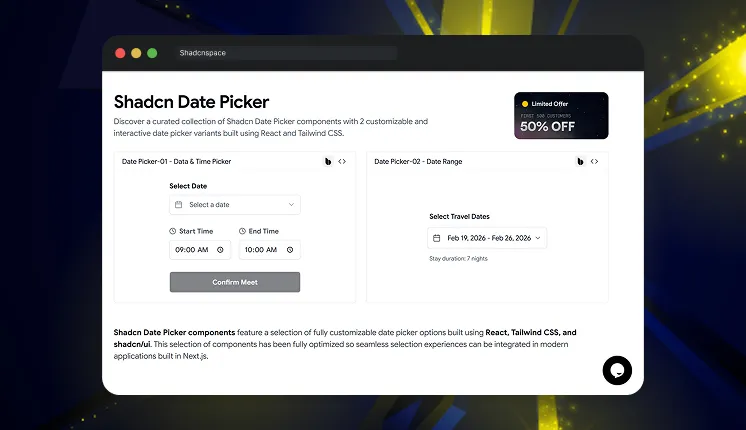
    Shadcn Space Date Picker

    Shadcn Space Date Picker

    This collection provides multiple ready-to-use date picker components built specifically for shadcn/ui projects. It includes standard date pickers, calendar popovers, and form-integrated pickers. All components follow shadcn component architecture, making them easy to integrate into existing projects.

    Tech stack: ShadcnUI v3.5, Radix UI v1, Base UI v1, React v19, TypeScript v5, Tailwind CSS v4

    Last Updated: Feb 2026

    Key features:

    • Includes calendar, popover, and input-based picker patterns
    • Uses composable shadcn component structure
    • Clean TypeScript component implementation
    • Supports form integration with controlled inputs
    • Compatible with Next.js server and client components

    Best for: SaaS dashboards, admin panels, and internal tools


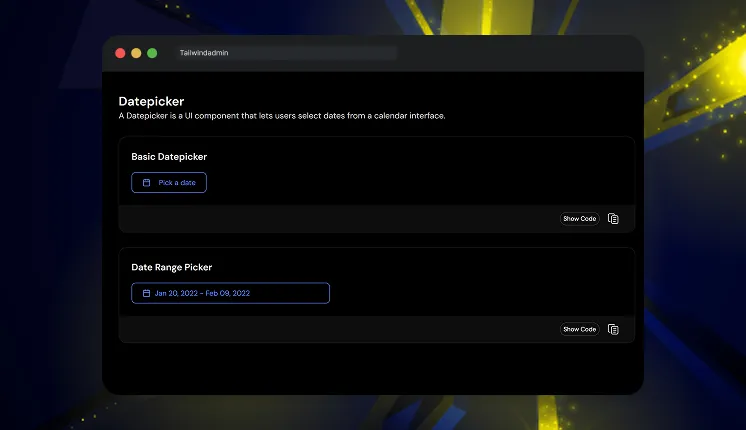
    Tailwindadmin Shadcn Date Picker

    Tailwindadmin Shadcn Date Picker

    This component provides production-ready date picker examples used in real dashboard interfaces. It includes calendar dropdown picker and input-based picker implementations. The code follows modular patterns suitable for scalable dashboard systems.

    Tech stack: ShadcnUI v3.5, Next.js v16, React v19, TypeScript v5, Tailwind CSS v4

    Last Updated: Feb 2026

    • Dashboard-focused picker UI patterns
    • Modular component separation
    • Clean Tailwind utility usage
    • Designed for analytics and reporting filters
    • Works well inside complex form systems

    Best for: Admin dashboards and analytics interfaces


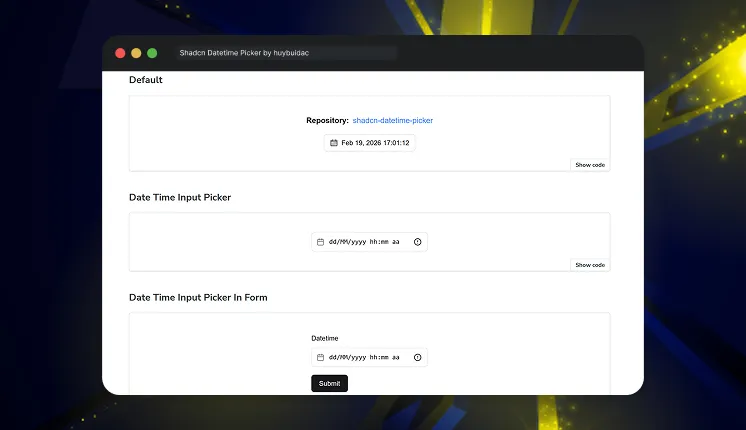
    Shadcn Datetime Picker by huybuidac

    Shadcn Datetime Picker by huybuidac

    This is a powerful and fully customizable component that simplifies date and time selection in React applications built with the Shadcn UI framework. With advanced features designed to enhance the user experience, this datetime picker provides seamless integration and a responsive, user-friendly interface. Whether you need a robust datetime, date, or time picker, this provides the flexibility and functionality needed for modern applications.

    Tech stack: ShadcnUI v2, Next.js v14, React v18, Radix UI v1, Tailwind CSS v3

    GitHub Stars: 202

    Last Updated: 2024

    Key features:

    • Combined date and time picker support
    • Timezone support for global apps
    • Min and max date validation
    • Custom trigger rendering support
    • Works with React state and form libraries

    Best for: SaaS apps with timezone and datetime requirements


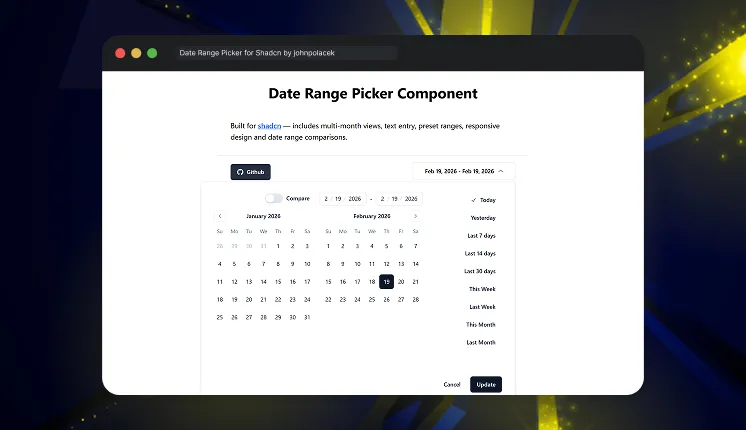
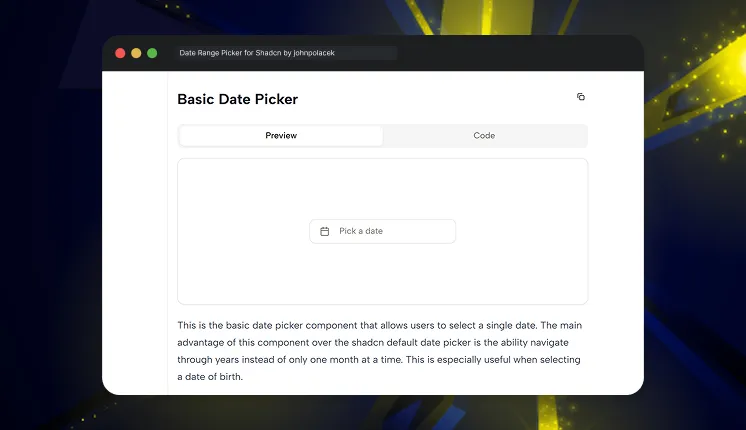
    Date Range Picker for Shadcn by johnpolacek

    Date Range Picker for Shadcn by johnpolacek

    This is a reusable component built for Shadcn using beautifully designed components from Radix UI and Tailwind CSS. It provides a dropdown interface to allow users to select or enter a range of dates and includes additional options such as preset date ranges and an optional date comparison feature.

    Tech stack: Radix UI v1, Mocha.js v10, React v18, Jest v29.5, Tailwind CSS v3

    GitHub Stars: 1K+

    Last Updated: 2024

    • Native date range selection support
    • Optimized for analytics filtering
    • Clean range selection state logic
    • Works with controlled components
    • Designed for dashboard usage

    Best for: Analytics dashboards and reporting systems


    Shadcn Date Picker by flixlix

    Shadcn Date Picker by flixlix

    This custom Shadcn component aims to provide a more advanced alternative to the default date picker component. It is built on top of the react-day-picker library, which provides a wide range of customization options.

    Tech stack: ShadcnUI v2.6, Next.js v15, Radix UI v1, React v19, Tailwind CSS v3

    GitHub Stars: 363

    Last Updated: Dec 2025

    • Single date selection
    • Date range selection
    • Month and year navigation
    • Easy integration into existing UI systems
    • Supports Light & Dark Mode

    Best for: General application date selection


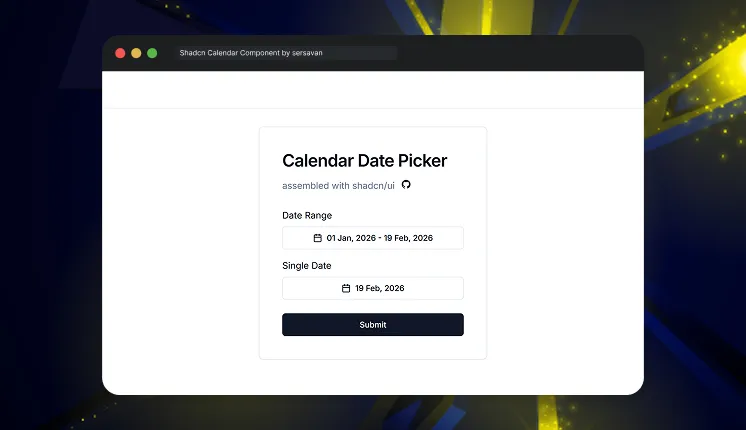
    Shadcn Calendar Component by sersavan

    Shadcn Calendar Component by sersavan

    This is a reusable calendar and date range picker built for shadcn/ui projects. It is designed for React and Next.js apps using TypeScript and Tailwind CSS. The component focuses on clean UI, easy customization, and smooth date selection. It helps developers quickly add flexible calendar functionality to modern web applications.

    Tech stack: Next.js v14, Radix UI v1, Zod v3, React v18, Tailwind CSS v3

    GitHub Stars: 327

    Last Updated: Dec 2025

    • Single date and date range selection support
    • Easy state management
    • Timezone-aware date handling 
    • Predefined date ranges like Today, Last 7 Days, This Month
    • Minimal setup required

    Best for: Custom calendar integrations


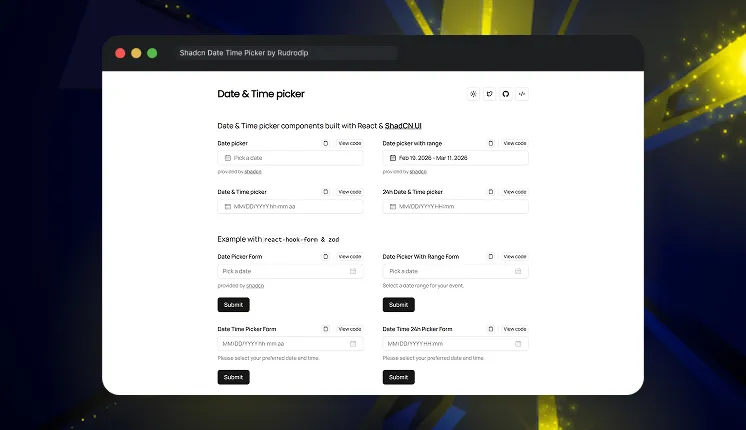
    Shadcn Date Time Picker by Rudrodip

    Shadcn Date Time Picker by Rudrodip

    This project features a range of Date and Time picker components built with ShadCN. These examples demonstrate the versatility and functionality of the component across various use cases.

    Tech stack: Next.js v14, Radix UI v1, Zod v3, React v18, Tailwind CSS v3

    GitHub Stars: 283

    Last Updated: May 2025

    • Supports combined date and time selection
    • Date range & 12h formats available 
    • Integrates with react-hook-form and Zod for form handling & validation 
    • Clean TypeScript implementation
    • Live examples with copy/view code UI for quick implementation 

    Best for: Booking systems and scheduling apps


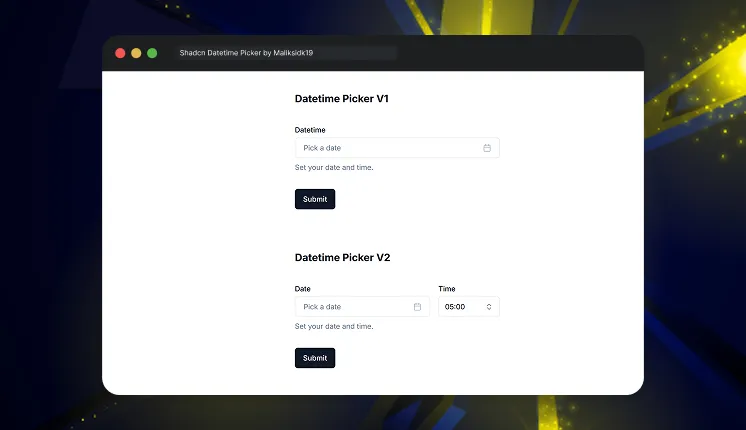
    Shadcn Datetime Picker by Maliksidk19

    Shadcn Datetime Picker by Maliksidk19

    This project provides a beautifully crafted datetime picker component built using the Shadcn UI. It offers an intuitive interface for selecting dates and times in React applications.

    Tech stack: Next.js v15, Radix UI v1, React v19, Tailwind CSS v3

    GitHub Stars: 266

    Last Updated: March 2025

    • Supports combined datetime selection
    • Works with controlled input components
    • Customizable Layout
    • Easy integration into dashboards
    • Lightweight implementation

    Best for: Internal tools and admin apps


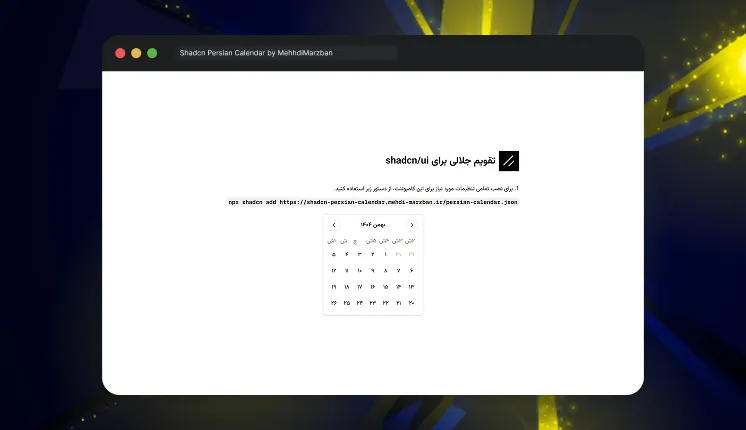
    Shadcn Persian Calendar by MehhdiMarzban

    Shadcn Persian Calendar by MehhdiMarzban

    This is a beautiful, accessible, and customizable Persian (Jalali) date picker component for React applications built with Shadcn UI components.

    Tech stack: Next.js v15, Radix UI v1, React v19, Tailwind CSS v3

    GitHub Stars: 27

    Last Updated: Feb 2025

    • Persian calendar support
    • Single date, range, and multiple date selection modes
    • Accessible (WAI-ARIA compliant)
    • Year switcher
    • Supports Dark mode

    Best for: Persian and regional applications


    Frequently Asked Questions

    Date pickers from Shadcn Space and Tailwindadmin are strong choices because their components are regularly updated and well-maintained. They offer support for analytics filtering and are built with a scalable component architecture, making them reliable for growing applications.


    The datetime picker by huybuidac supports timezone selection, min date, and max date validation. This is useful for global SaaS applications.


    Yes, all components are built with React, TypeScript, and Tailwind CSS, and work directly in Next.js apps.


    Final Thoughts

    These 9 free shadcn date picker components provide production-ready solutions for modern applications. They support core needs like date selection, datetime input, analytics filtering, and scheduling.

    For most SaaS and dashboard applications, the datetime picker by Shadcn Space and the date range picker by johnpolacek provide the best flexibility and scalability.

    If you’re building with shadcn/ui, you can also explore our curated collection of shadcn blocks to quickly create modern pages and layouts. We’ve also prepared a detailed guide on shadcn libraries that you can check out to discover more useful tools for your projects.

  • 30+ Best Shadcn Blocks for Startups & SaaS Dashboards

    When you’re building a SaaS product, admin dashboard, or internal tool, writing UI from scratch slows everything down. That’s why modern teams are moving toward Shadcn blocks – composable, accessible, and production-ready UI sections built on Shadcn, Radix UI, Base UI, and Tailwind CSS.

    In this guide, we’ll explore over 30+ essential Shadcn UI blocks for startups, highlight real-world examples with code, and explain how to integrate them into real products.

    This article is written for developers, founders, and product teams building with React, Next.js, and Tailwind CSS.

    For more information and better clarity, visit our official documentation guide.


    What are Shadcn Blocks?

    Shadcn blocks are prebuilt UI sections composed of multiple Shadcn components. These blocks typically include layouts such as:

    • Dashboards
    • Sidebars
    • Auth pages
    • Pricing sections
    • Tables
    • Forms
    • Settings pages

    Instead of assembling the UI from scratch, you copy a block, drop it into your codebase, and adapt it to your product’s data and logic.


    Shadcn Space Blocks Features

    FeatureDescription
    Responsive PreviewsView block layouts across mobile, tablet, and desktop screens.
    Install AnywhereInstall blocks via CLI using pnpm, npm, yarn, or bun.
    Open in v0Preview blocks live and edit them in v0 with one click.
    Theme Toggle (Light/Dark)Built-in support to switch theme styles.
    Figma PreviewAccess corresponding Figma designs for each block.
    Copy-Paste ReadyCopy the JSX directly into your React or Next.js project.

    30+ Essential Shadcn UI Blocks for Startups

    Below are the most commonly used blocks across SaaS and startup products.


    Agency Hero Section

    Agency Hero Section

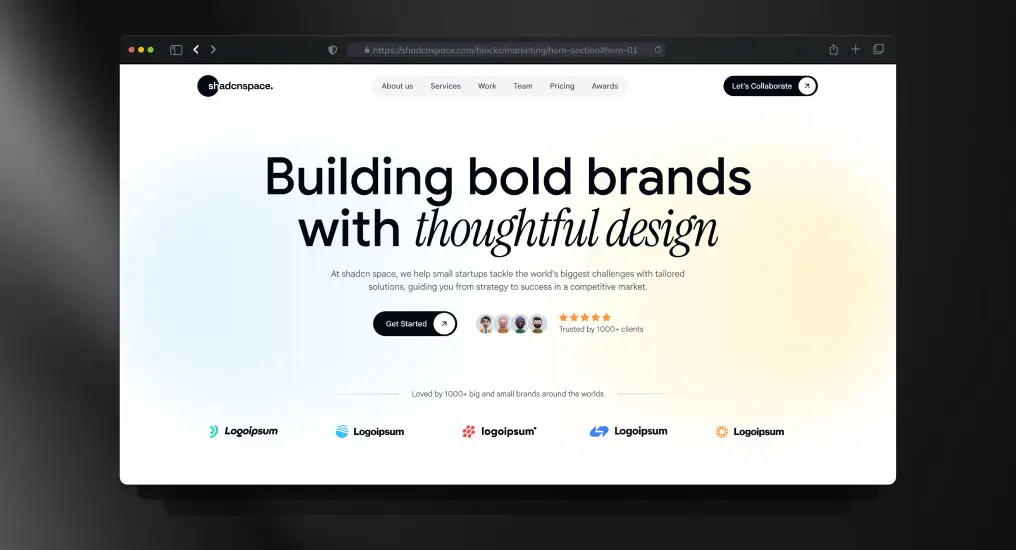
    A conversion-focused hero layout built for service-based and product-driven teams. Uses clear typography hierarchy, CTA prioritization, and responsive spacing to establish intent immediately. Designed to plug directly into marketing or product entry pages without refactoring.

    Use Cases

    • SaaS landing page hero
    • Agency or studio homepage
    • Product launch announcement
    • Startup marketing website
    • Campaign-specific landing page

    Three-Tier Pricing Layout Section

    Three-Tier Pricing Layout Section

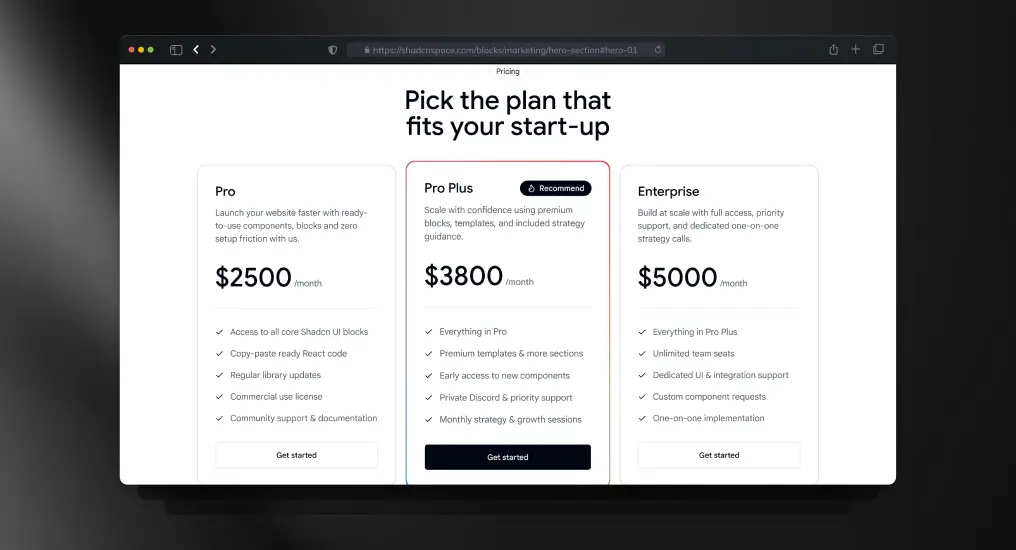
    A structured pricing block with three plan tiers optimized for comparison clarity. Supports scalable pricing models and maps cleanly to Stripe or custom billing logic. Keeps pricing decisions frictionless for users.

    Use Cases

    • SaaS subscription pricing
    • Plan comparison pages
    • Early-stage MVP pricing
    • Startup vs enterprise plans
    • Product monetization pages

    Two Charts Side by Side

    Two Charts Side by Side

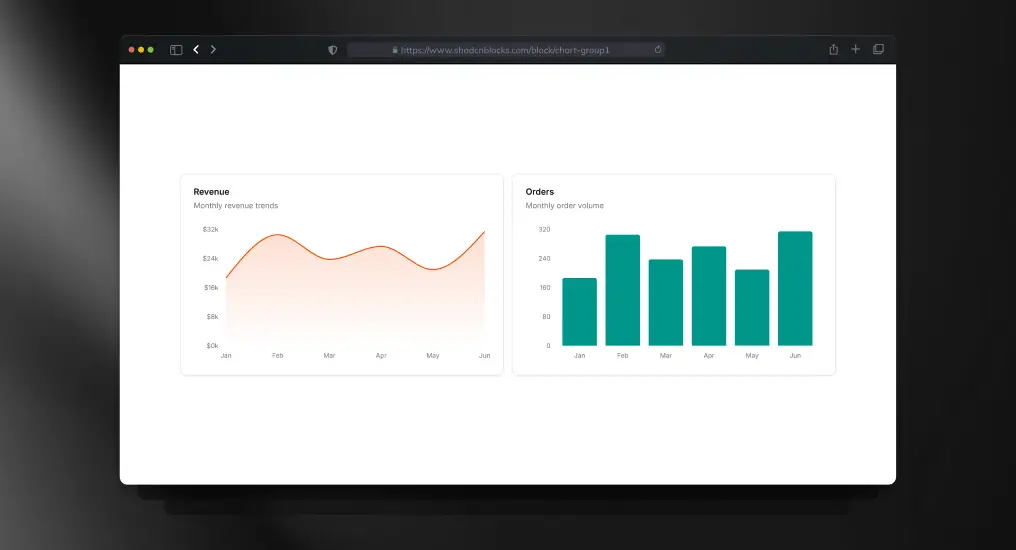
    A comparative chart layout for displaying related metrics together. Designed to maintain visual balance across screen sizes.

    Use Cases

    • Metric comparison
    • A/B test analysis
    • Performance benchmarking
    • Analytics dashboards
    • Business insights

    About Us Section

    About Us Section

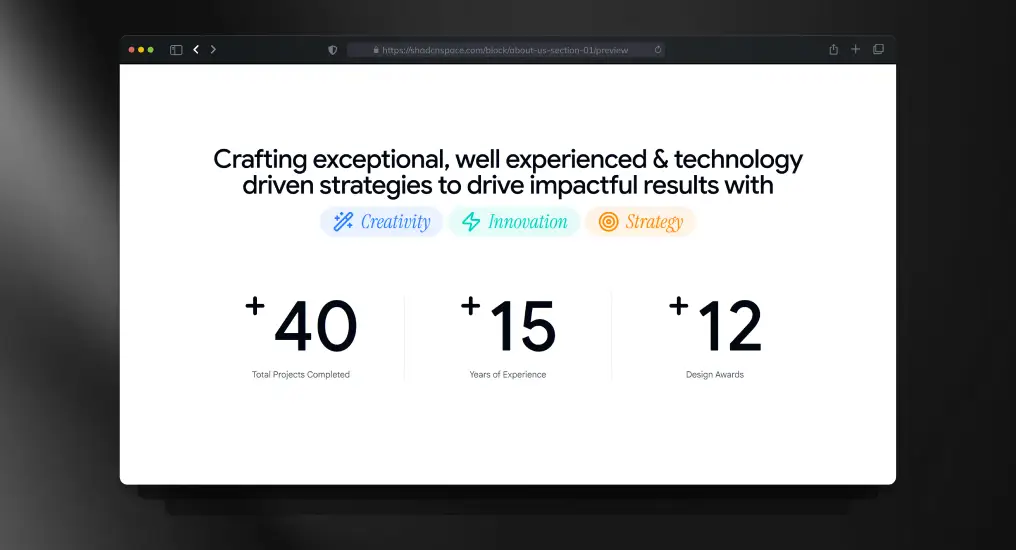
    A lightweight content section for communicating the company’s mission, vision, or background. Designed to be readable without interrupting primary navigation or conversion flows. Easy to adapt for static or CMS-driven content.

    Use Cases

    • About the company page
    • Startup story section
    • Mission & vision content
    • Team introduction area
    • Brand narrative pages

    Three Columns Feature with Icons

    Three Columns Feature with Icons

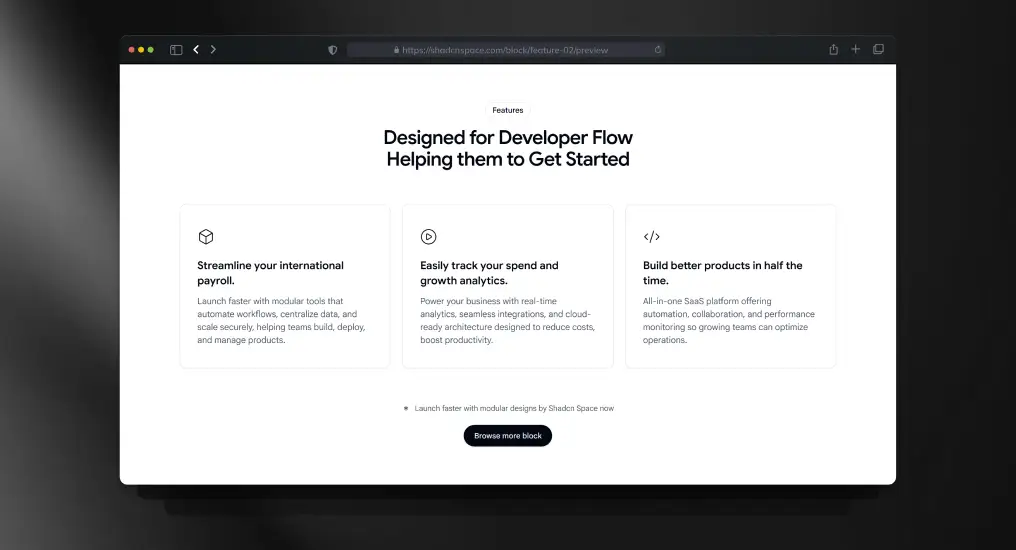
    A feature listing block with icon support and equal-width columns. Designed to keep content scannable while maintaining consistent spacing and alignment across breakpoints.

    Use Cases

    • Product feature highlights
    • Homepage value propositions
    • Competitive comparison sections
    • Post-hero content blocks
    • Marketing feature summaries

    Multi-Column Footer Layout

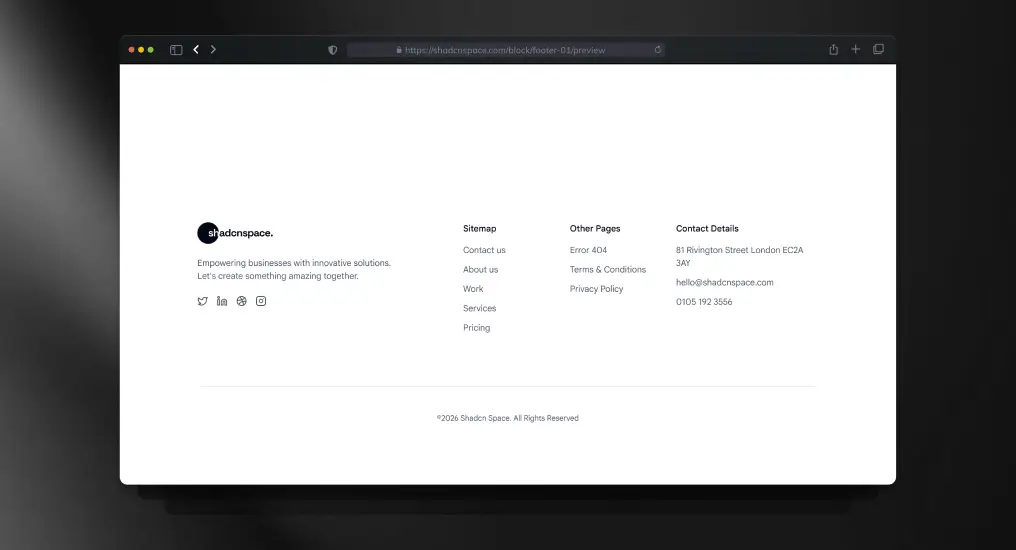
    A structured footer layout with multiple link groups and brand context. Acts as a stable layout anchor across marketing and application pages. Designed for extensibility without visual clutter.

    Use Cases

    • Site-wide footer
    • Legal and policy links
    • Resource navigation
    • Newsletter signup area
    • Marketplace or SaaS footer

    Testimonial Slider Showcase

    Testimonial Slider Showcase

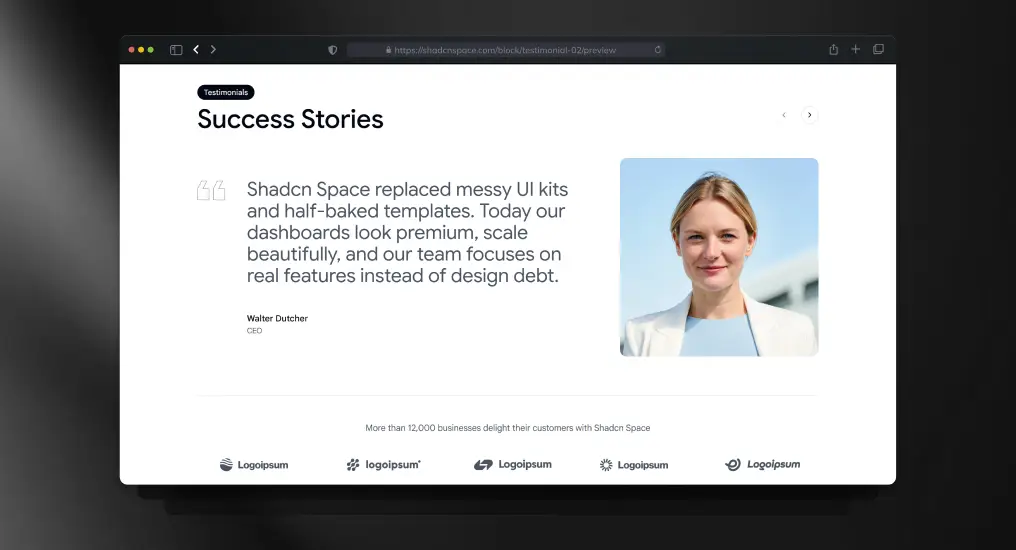
    A testimonial carousel block designed for dynamic or static data sources. Preserves layout stability while cycling content, making it suitable for performance-sensitive landing pages.

    Use Cases

    • Social proof sections
    • Customer success highlights
    • Case study previews
    • Trust-building on landing pages
    • Product credibility sections

    Navigation Bar Block

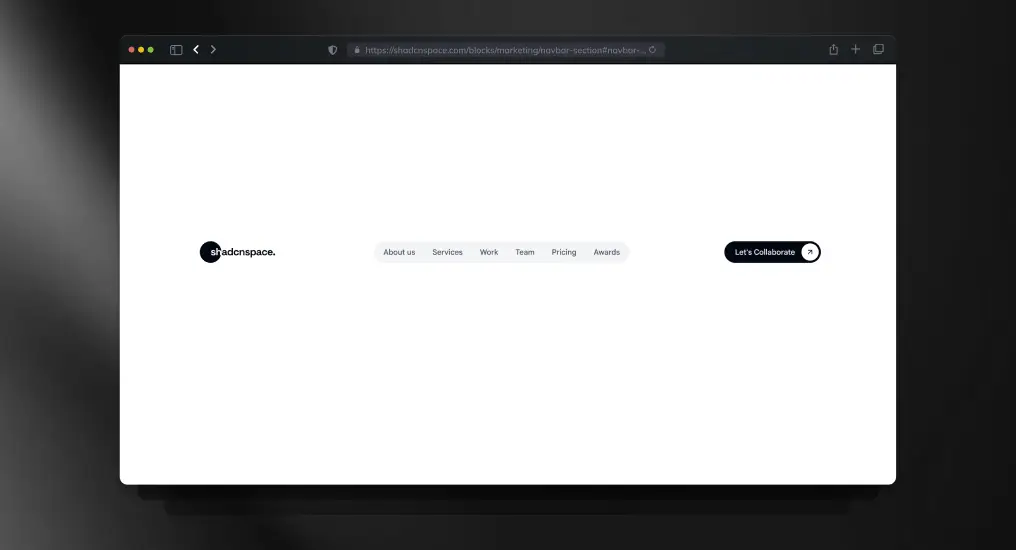
    A responsive top navigation bar supporting branding, links, and action items. Handles layout shifts cleanly across screen sizes and works for both public and authenticated states.

    Use Cases

    • Marketing website navigation
    • Logged-in app header
    • Sticky navigation layouts
    • Dropdown menu integration
    • Product navigation bar

    Gradient CTA Block

    Gradient CTA Block

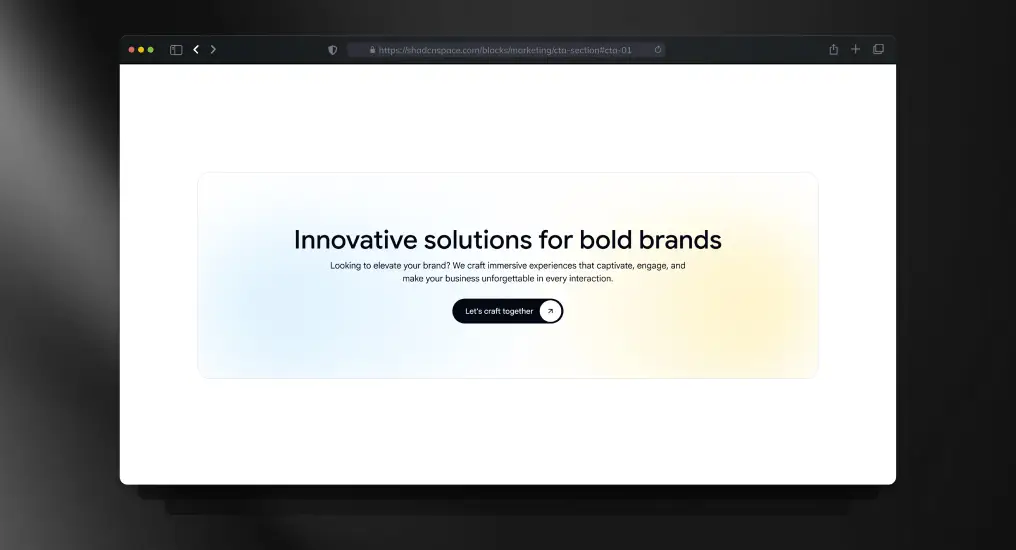
    A visually distinct call-to-action section using gradient emphasis without sacrificing readability. Designed to reduce distraction and guide users toward a single primary action.

    Use Cases

    • Signup prompts
    • Early access invitations
    • Product demo CTAs
    • Newsletter subscriptions
    • Conversion-focused sections

    Project Inquiry Contact Form

    Project Inquiry Contact Form

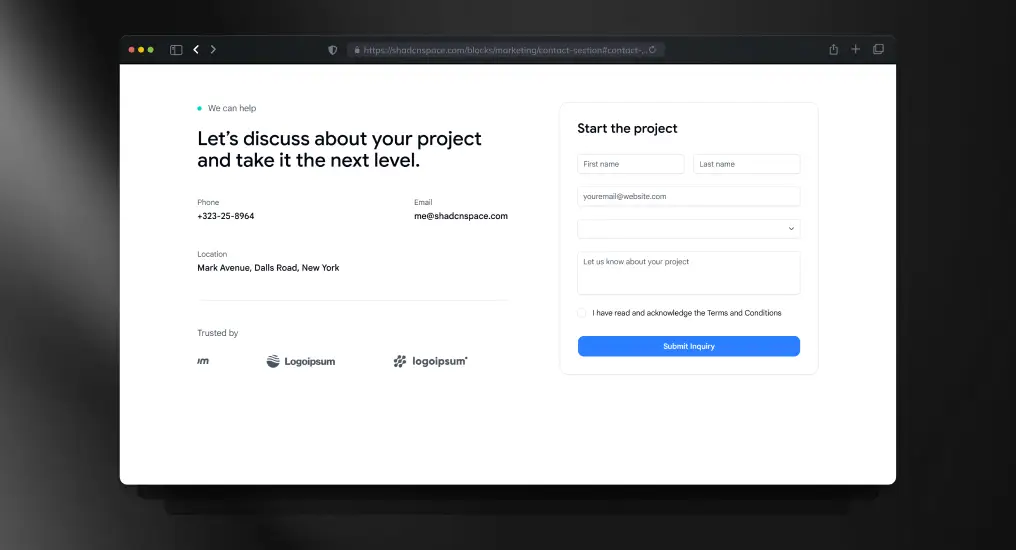
    A form-centric contact block designed for direct integration with API routes or third-party handlers. Keeps layout minimal while supporting validation and submission feedback.

    Use Cases

    • Contact pages
    • Project inquiry forms
    • Partnership requests
    • Support ticket entry
    • Lead capture forms

    Product Quick View

    Product Quick View

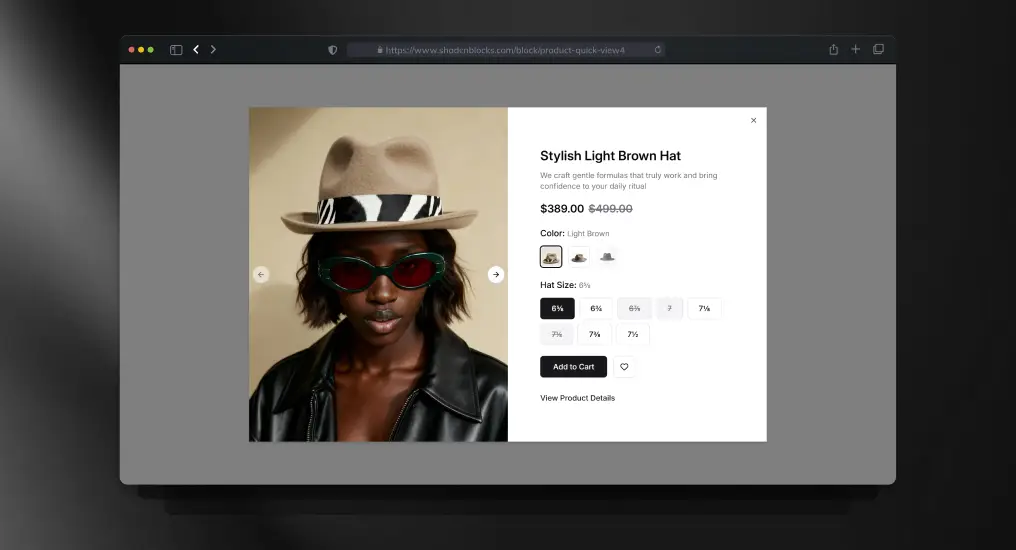
    A modal-style product preview block for fast browsing without navigation changes.

    Use Cases

    • Ecommerce quick previews
    • Product comparison
    • Upsell opportunities
    • Faster browsing flows
    • Catalog interfaces

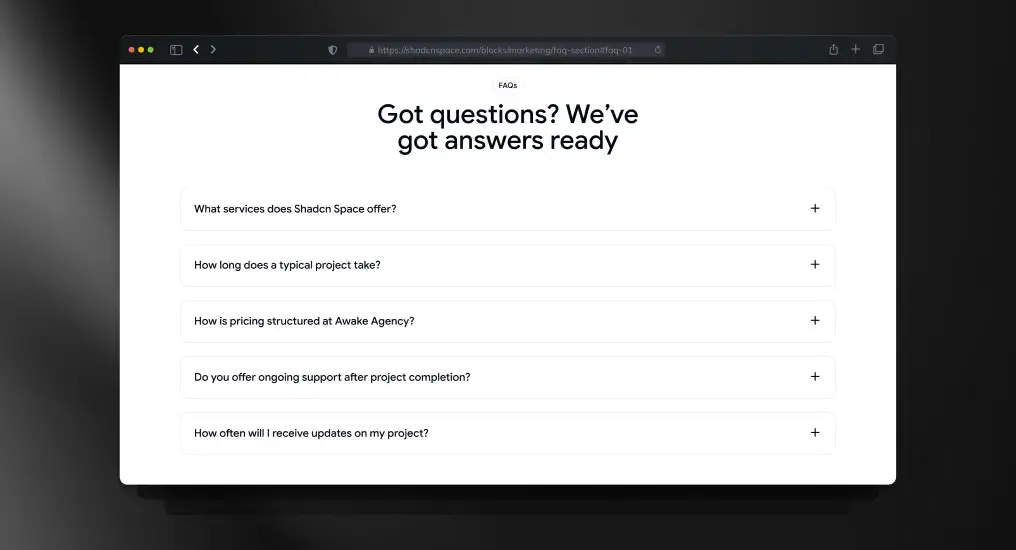
    Accordion-Style FAQ Section

    Accordion-Style FAQ Section

    An expandable FAQ layout optimized for readability and SEO. Keeps long-form content compact while allowing users to scan and reveal only relevant answers.

    Use Cases

    • Product FAQs
    • Pricing clarification sections
    • Documentation pages
    • Sales enablement content
    • Support resources

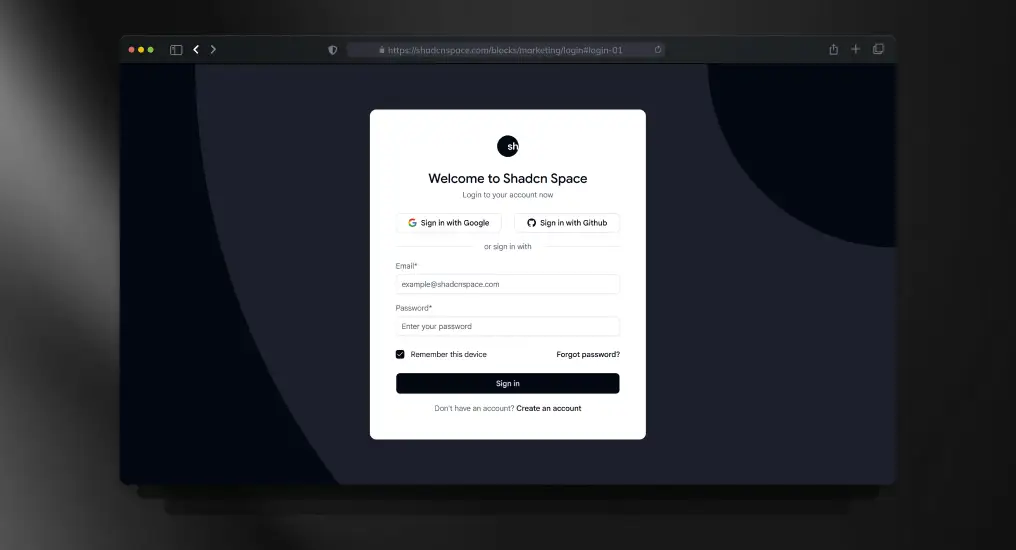
    Login Page Block

    Login Page Block

    A standard authentication layout supporting email/password and external providers. Designed to integrate with any auth system without enforcing implementation details.

    Use Cases

    • SaaS login pages
    • Customer portals
    • Admin access screens
    • Secure app entry points
    • Auth gateway pages

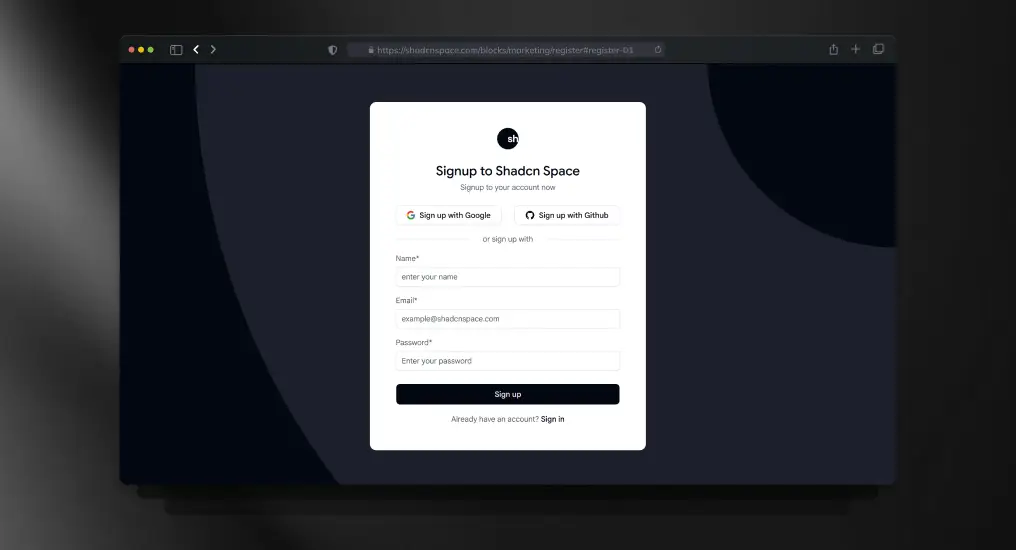
    Sign-Up Page Block

    Sign-Up Page Block

    A full registration layout supporting validation, onboarding flows, and progressive disclosure. Built to scale from simple signup to complex onboarding.

    Use Cases

    • New user registration
    • Beta access signup
    • Email-based onboarding
    • Product trial entry
    • Account creation pages

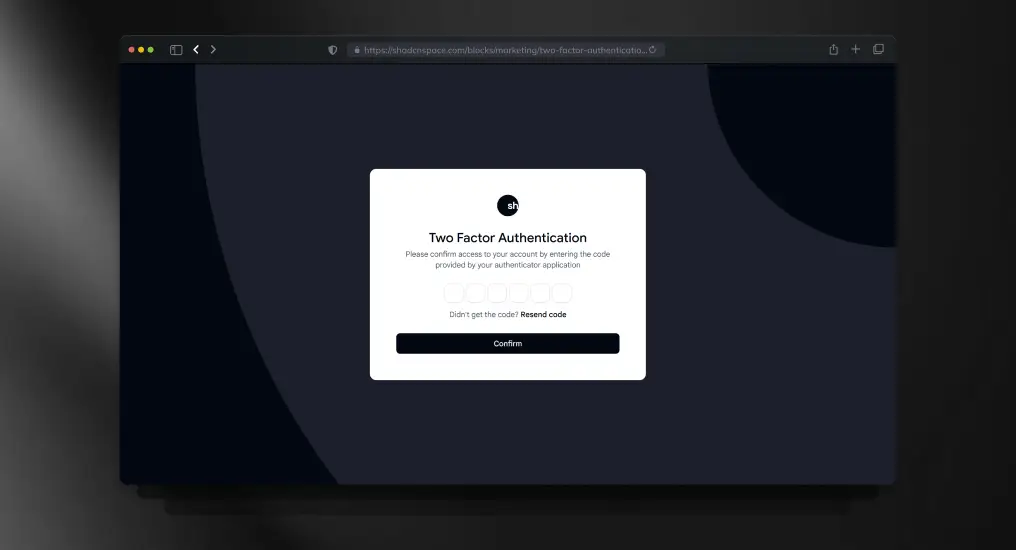
    Two-Factor Authentication Page

    Two-Factor Authentication Page

    A focused verification layout for OTP or security codes. Designed to minimize cognitive load during sensitive authentication steps.

    Use Cases

    • Secure login flows
    • Financial dashboards
    • Admin verification steps
    • Account protection layers
    • Sensitive action confirmation

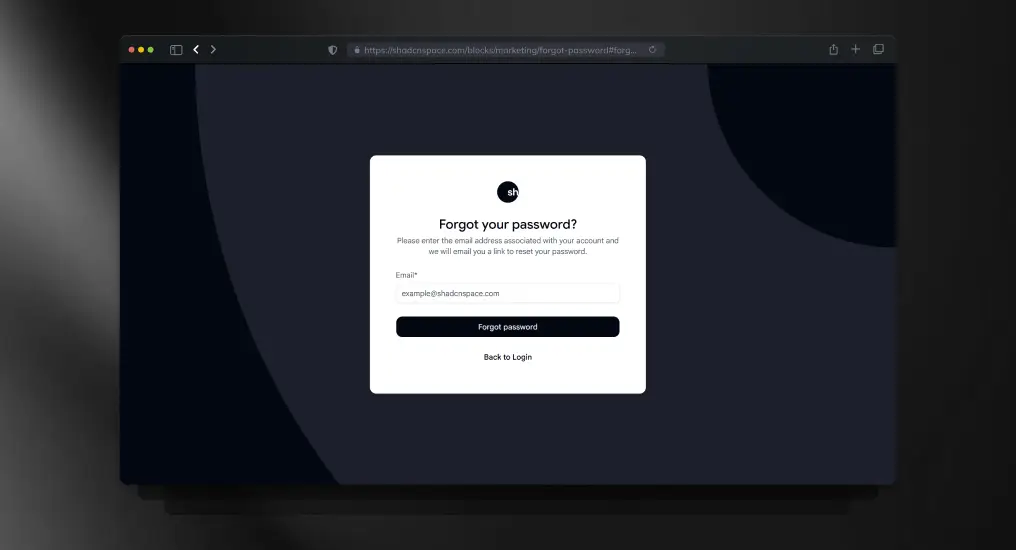
    Forgot Password Page

    Forgot Password Page

    An isolated password recovery layout designed to keep authentication flows predictable and simple. Easily integrates with email-based reset systems.

    Use Cases

    • Password recovery
    • Account maintenance
    • Support workflows
    • Credential reset flows
    • Auth error recovery

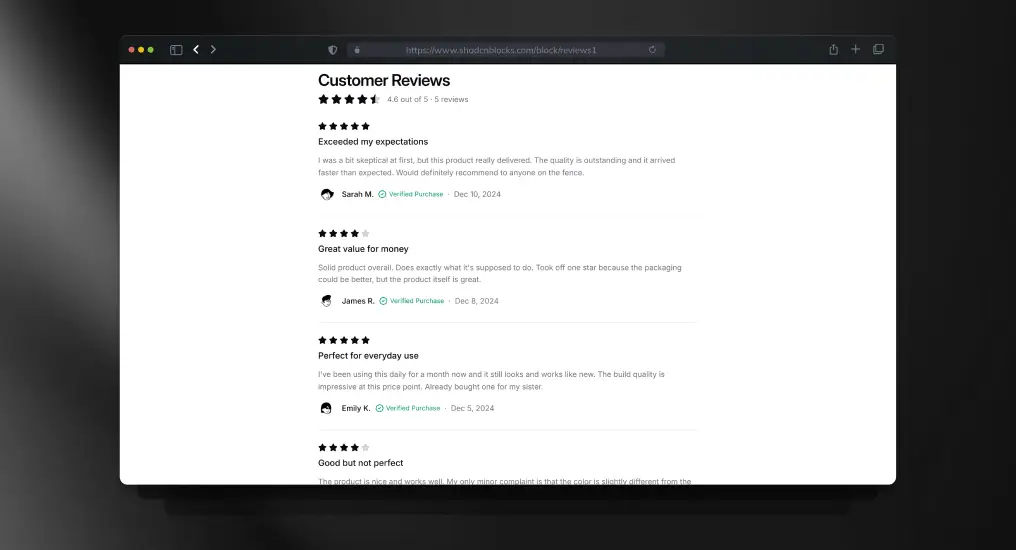
    Customer Reviews Block

    Customer Reviews Block

    A review listing block optimized for readability and trust. Supports ratings, comments, and structured content.

    Use Cases

    • Product review sections
    • Social proof displays
    • Ecommerce product pages
    • Feedback showcases
    • Trust-building UI

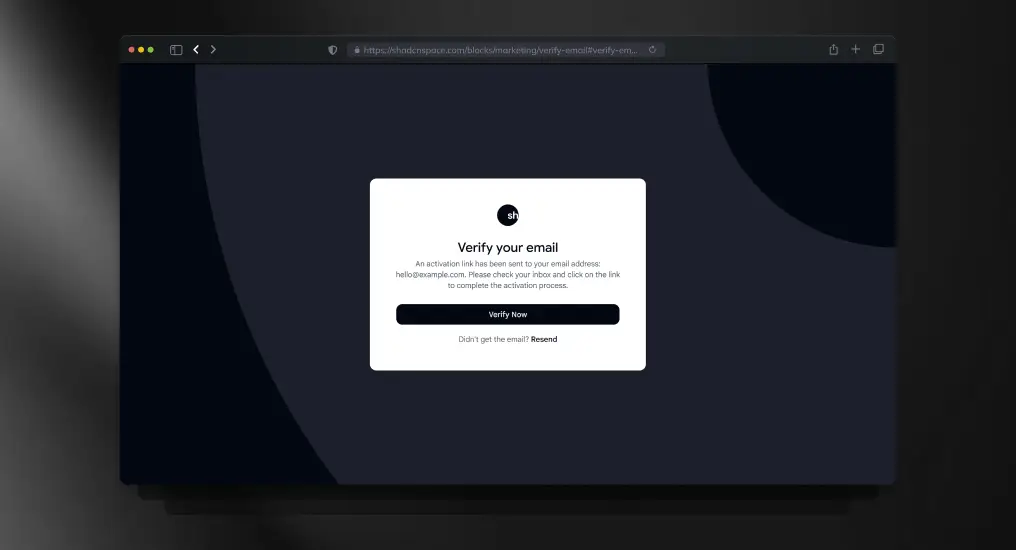
    Email Verification Page

    Email Verification Page

    A post-registration verification layout used to gate full product access. Keeps users focused on completing activation without distraction.

    Use Cases

    • Account activation
    • Email confirmation flows
    • Post-signup onboarding
    • Security enforcement
    • Access gating pages

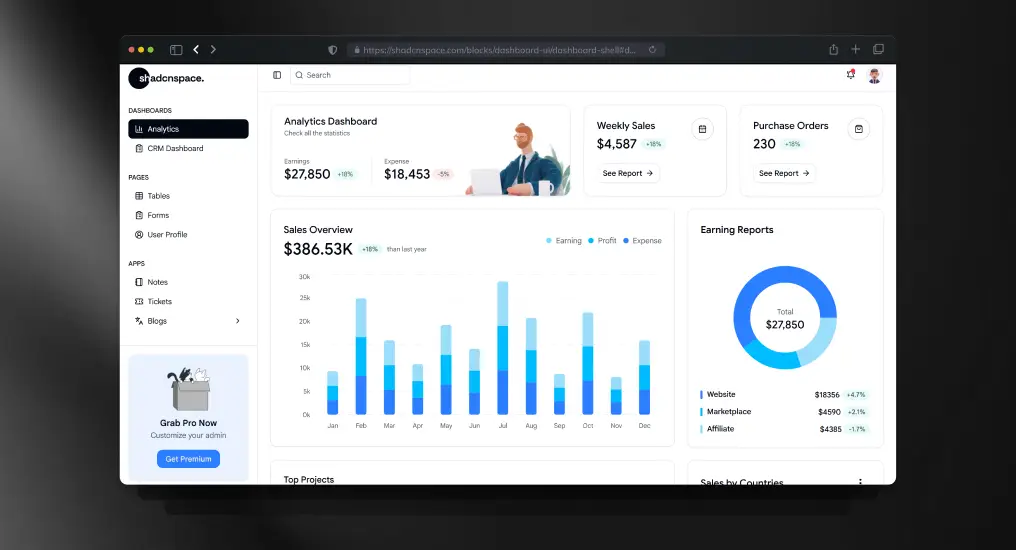
    Dashboard Shell

    Dashboard Shell

    A master application layout combining sidebar and main content regions. Establishes a consistent structure for complex, multi-view interfaces.

    Use Cases

    • SaaS admin dashboards
    • Analytics platforms
    • Internal tools
    • Multi-module applications
    • Back-office systems

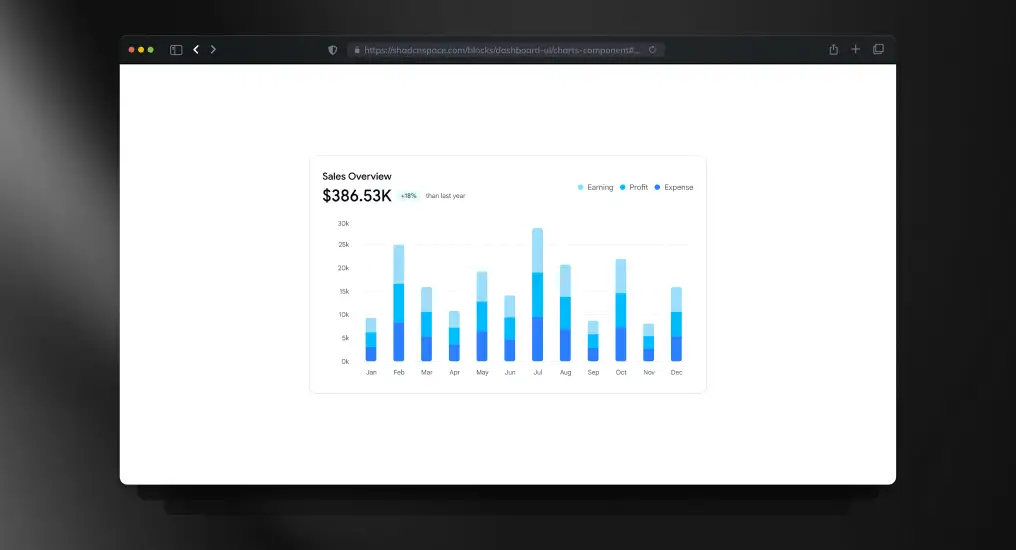
    Sales Performance Bar Chart

    Sales Performance Bar Chart

    A chart-focused block optimized for performance and clarity. Abstracts layout concerns while remaining chart-library agnostic.

    Use Cases

    • Revenue tracking
    • Sales analytics
    • KPI dashboards
    • Performance reports
    • Business intelligence views

    Shopping Cart Block

    Shopping Cart Block

    A cart layout showing selected items, quantities, and totals. Designed to integrate with checkout or payment flows.

    Use Cases

    • Ecommerce carts
    • Subscription add-ons
    • Order previews
    • Checkout preparation
    • Product bundling

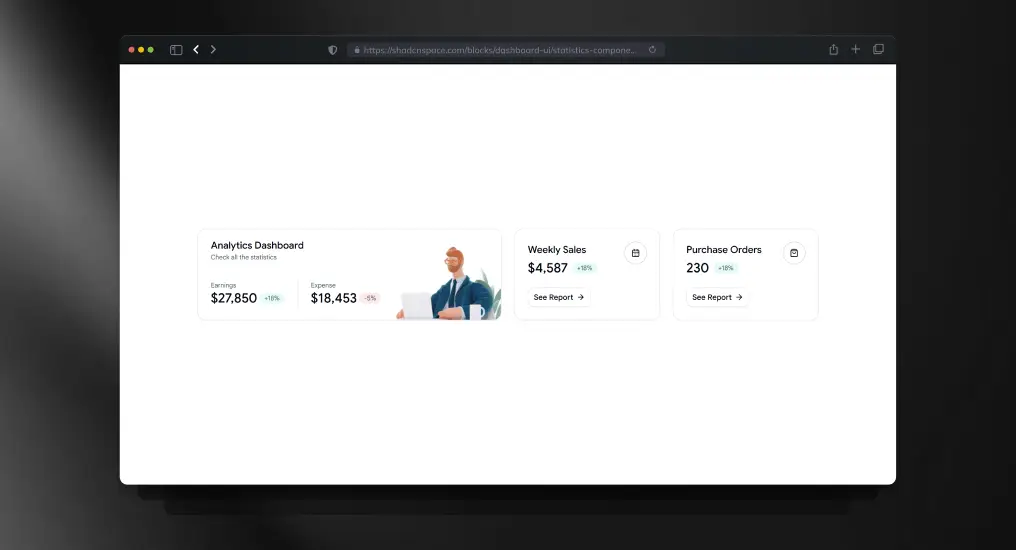
    Statistics Section with KPI Cards

    Statistics Section with KPI Cards

    A compact metrics block designed to surface high-signal data at a glance. Ideal for executive summaries and dashboard overviews.

    Use Cases

    • KPI dashboards
    • Executive reporting
    • Daily metrics display
    • Performance snapshots
    • Summary panels

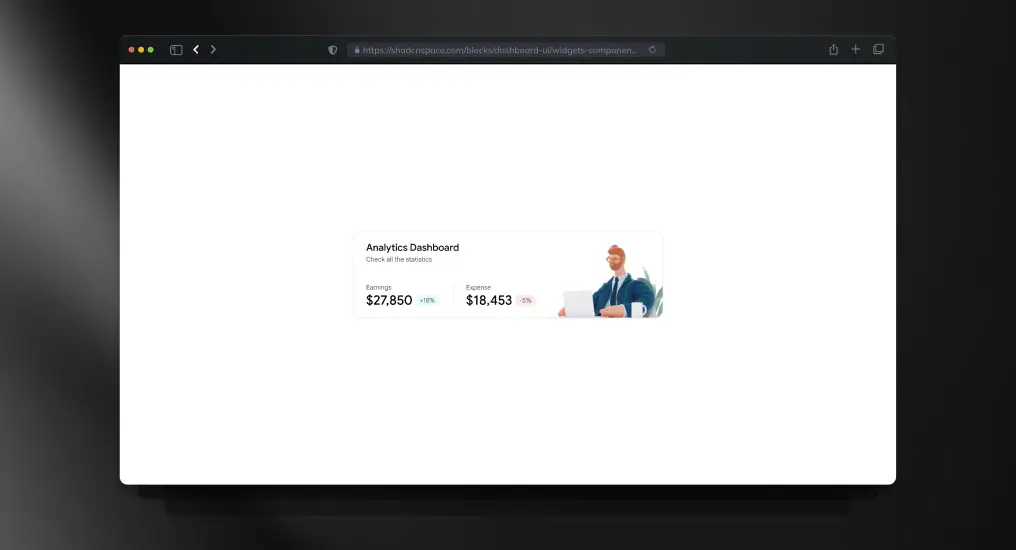
    Analytics Overview Widget

    Analytics Overview Widget

    A modular widget block for displaying focused analytics or quick insights. Designed to compose easily into customizable dashboards.

    Use Cases

    • Personalized dashboards
    • Mini analytics panels
    • Real-time indicators
    • Notification widgets
    • Quick insights views

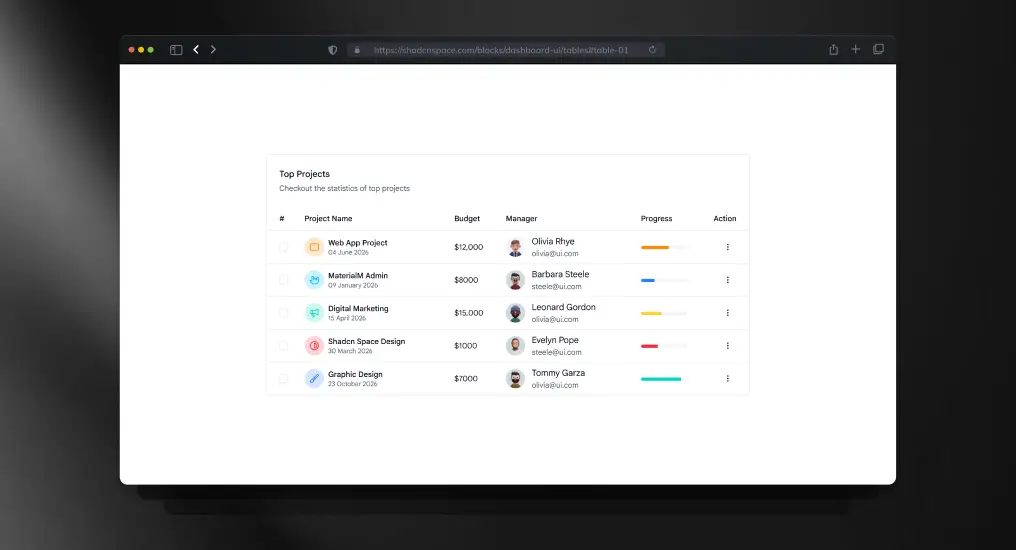
    Data Table Block

    Data Table Block

    A structured table layout supporting extension for sorting, pagination, and row actions. Designed for readability and large datasets.

    Use Cases

    • User management tables
    • Orders and transactions
    • Logs and audit trails
    • Admin data grids
    • Reporting interfaces

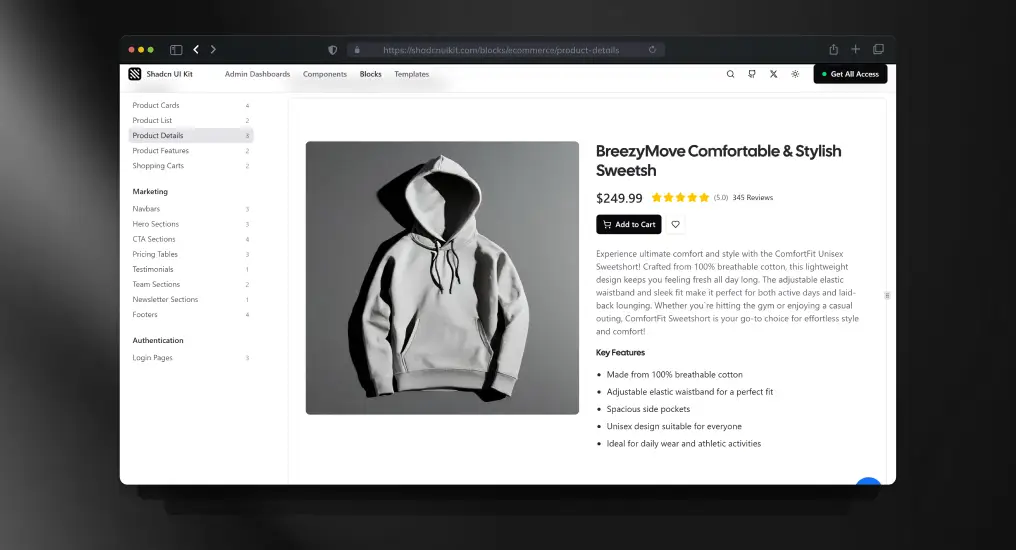
    Product Detail Block

    Product Detail Block

    A full product detail layout designed for clarity and conversion. Supports images, pricing, and descriptive content.

    Use Cases

    • Ecommerce product pages
    • Digital goods listings
    • SaaS add-ons
    • Marketplace items
    • Feature detail views

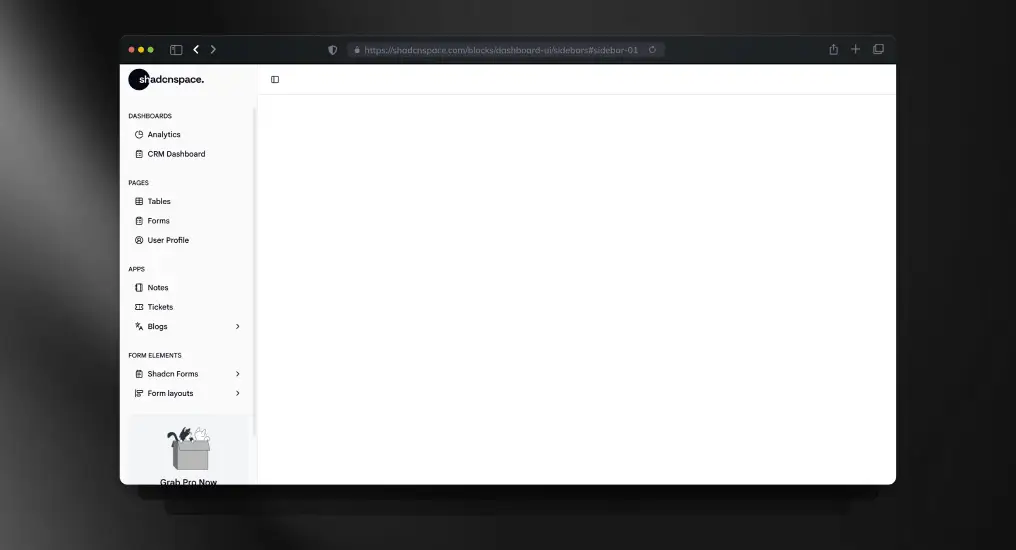
    Admin Dashboard Sidebar

    Admin Dashboard Sidebar

    A vertical navigation sidebar optimized for long-lived applications. Supports role-based navigation and scalable menu structures.

    Use Cases

    • Admin dashboards
    • Feature-rich SaaS apps
    • Internal tooling
    • Role-based navigation
    • Persistent app layout

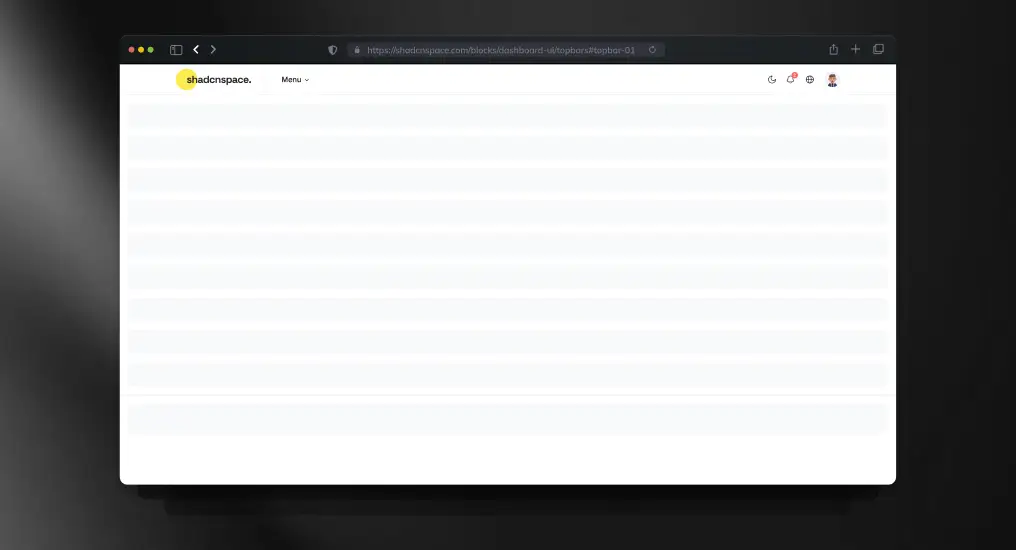
    Simple Topbar Block

    Simple Topbar Block

    A minimal topbar layout designed for global actions and context-aware controls. Commonly paired with dashboards and internal tools.

    Use Cases

    • Search and command access
    • Notifications area
    • App-level actions
    • Dashboard headers
    • Branding placement

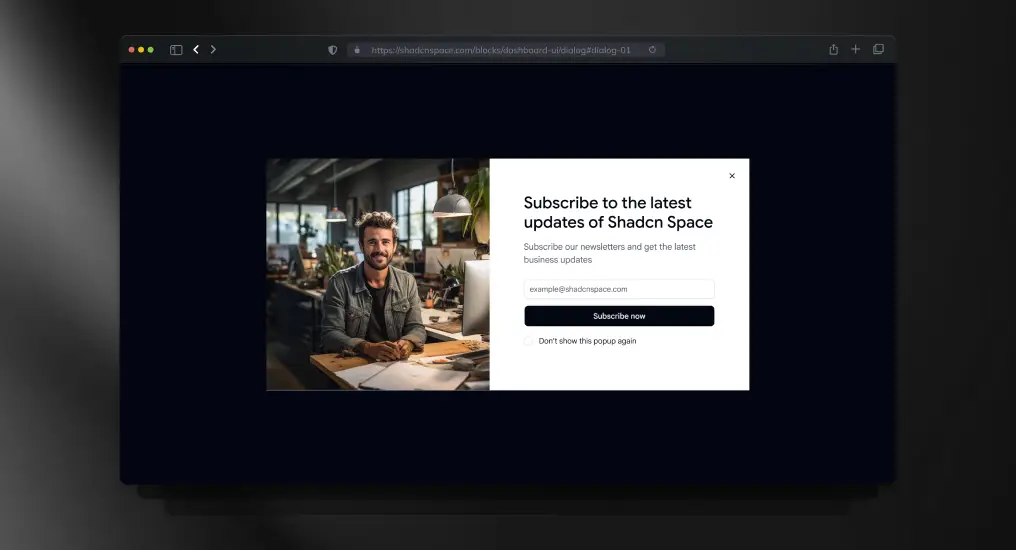
    Newsletter Subscription Dialog

    Newsletter Subscription Dialog

    A modal-based subscription block designed to capture emails without disrupting user flow. Keeps background context intact during interaction.

    Use Cases

    • Newsletter signup
    • Product updates opt-in
    • Marketing campaigns
    • Lead generation modals
    • Feature announcements

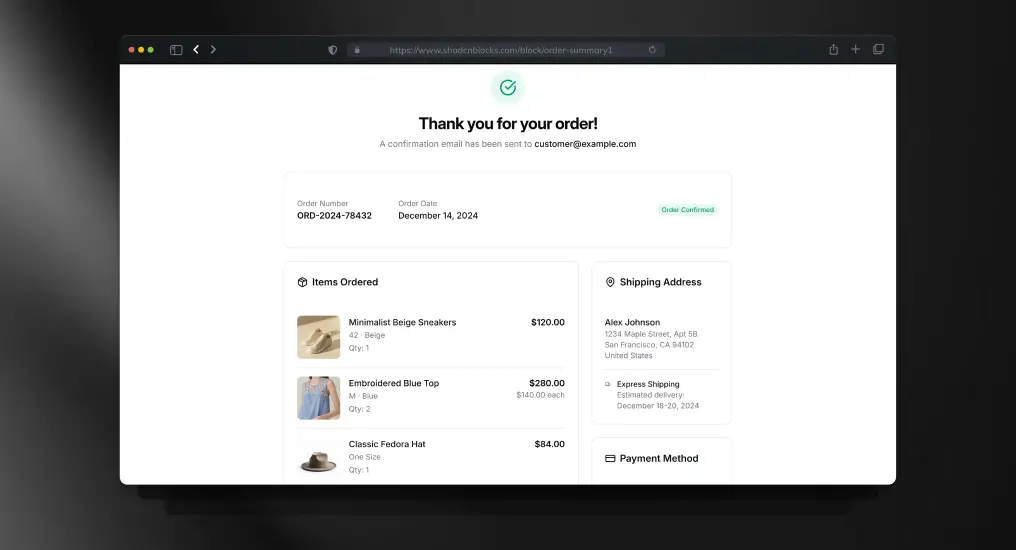
    Order Summary Block

    Order Summary Block

    A transactional summary layout showing selected items and totals. Designed to reduce errors before checkout confirmation.

    Use Cases

    • Checkout review pages
    • Order confirmation
    • Invoice previews
    • Subscription summaries
    • Payment verification

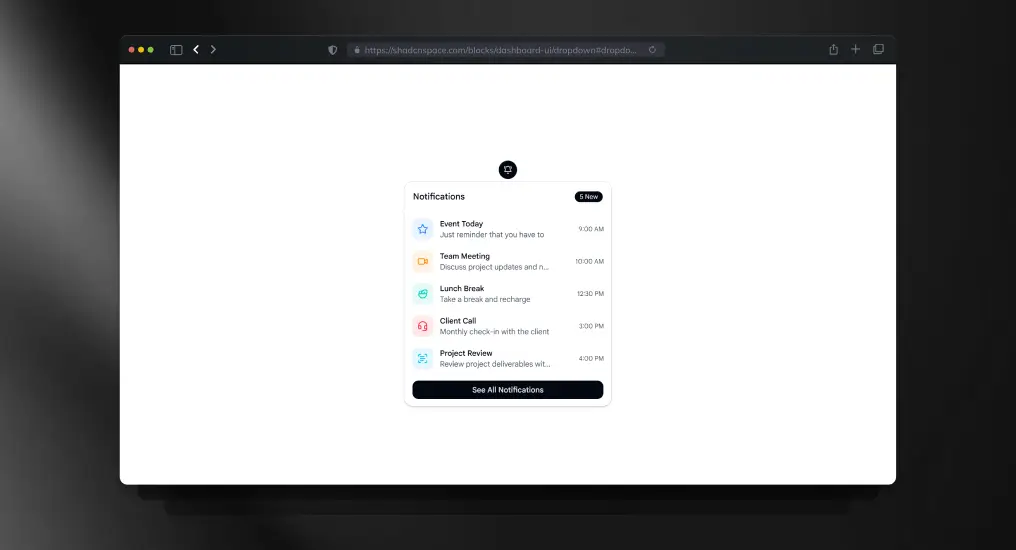
    User Profile Dropdown

    User Profile Dropdown

    A compact dropdown menu for user-specific actions. Designed to keep action density high without cluttering the interface.

    Use Cases

    • Profile menus
    • Account actions
    • Contextual navigation
    • User settings access
    • Authenticated headers

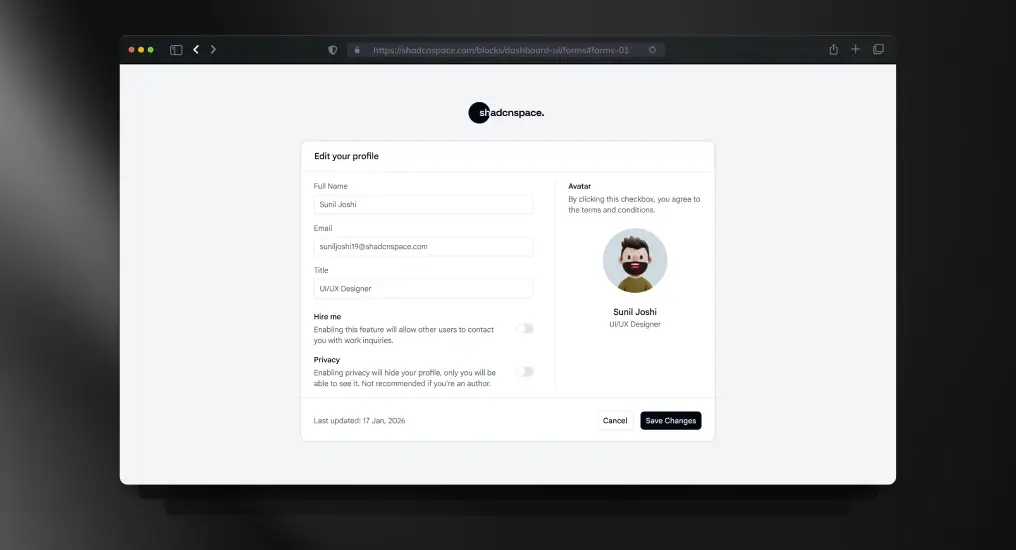
    Edit Profile Form

    Edit Profile Form

    A full form layout optimized for settings and profile updates. Balances readability with validation and error handling patterns.

    Use Cases

    • User profile editing
    • Account settings pages
    • Preference management
    • Personal information updates
    • Form validation examples

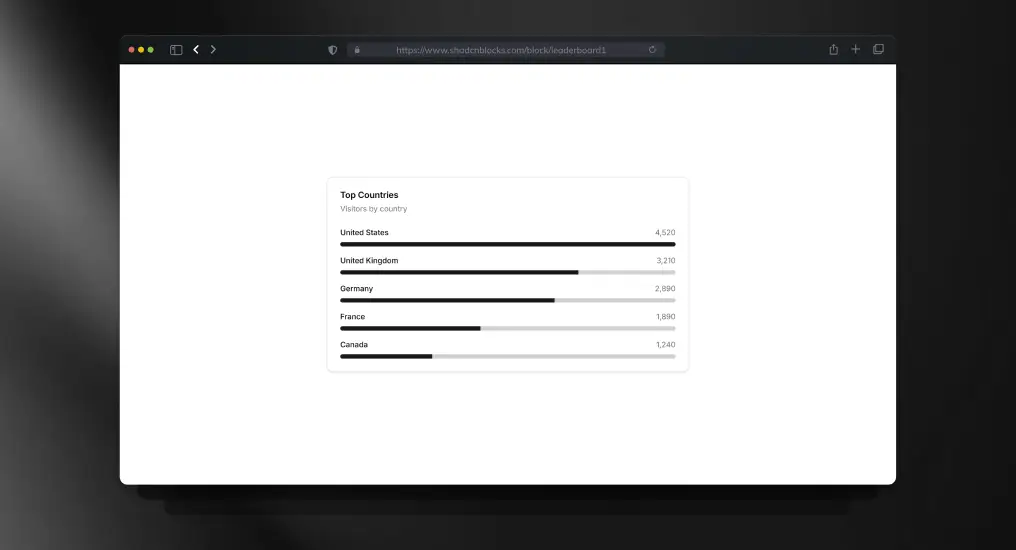
    Leaderboard with Progress Bars

    Leaderboard with Progress Bars

    A ranked list layout with visual progress indicators. Useful for competitive or performance-based data presentation.

    Use Cases

    • Team performance tracking
    • Sales leaderboards
    • Gamification features
    • Ranking systems
    • Progress visualization

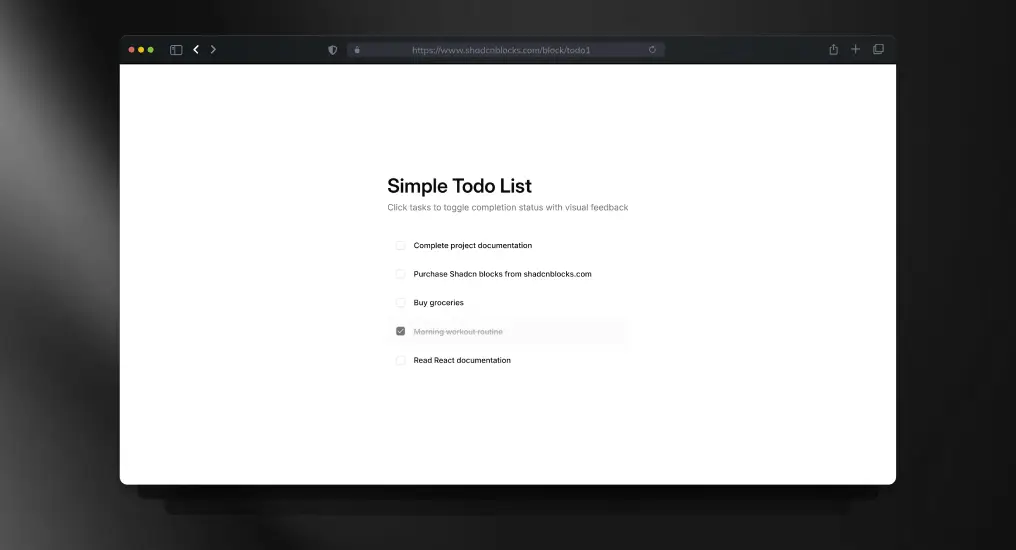
    Simple Todo List

    Simple Todo List

    A lightweight task management block demonstrating state handling and list updates. Useful for internal tools or demos.

    Use Cases

    • Task tracking
    • Productivity tools
    • Internal utilities
    • Demo applications
    • Learning examples

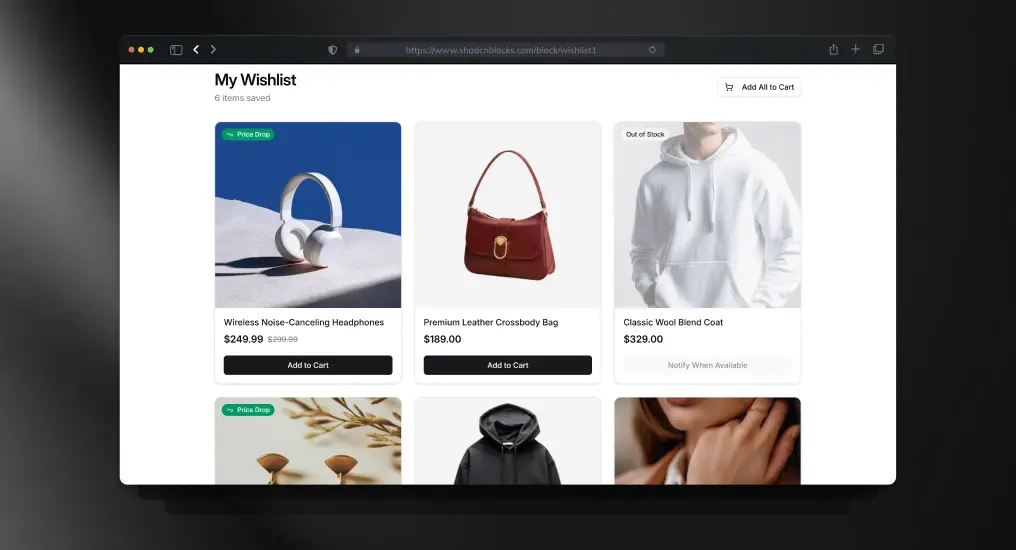
    Wishlist Block

    Wishlist Block

    A product wishlist layout designed for saving and managing items. Commonly used in ecommerce and content platforms.

    Use Cases

    • Ecommerce wishlists
    • Saved items lists
    • Product bookmarking
    • User preferences
    • Shopping assistants

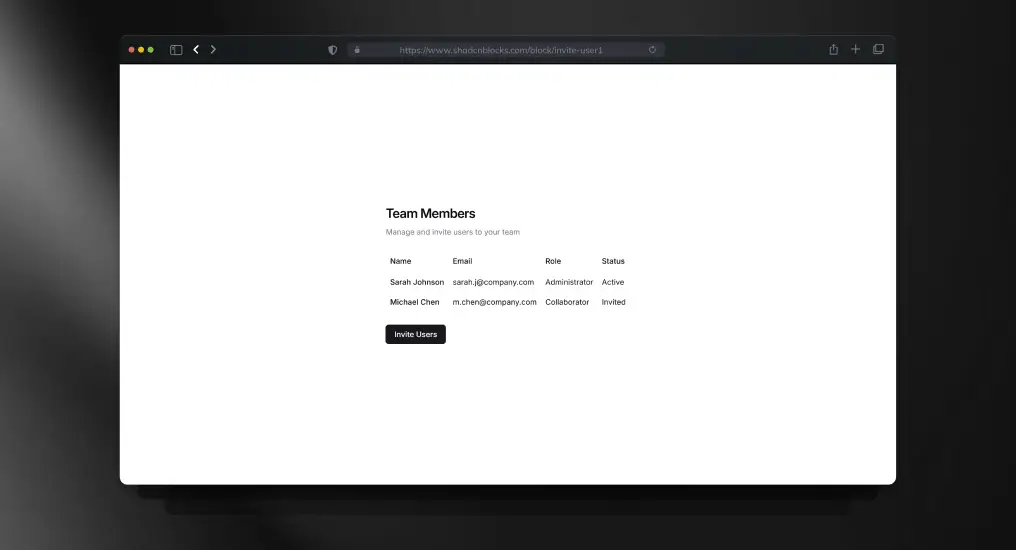
    User Table with Dialog Invite

    User Table with Dialog Invite

    A user management table combined with a dialog-based invite flow. Keeps management actions contextual and efficient.

    Use Cases

    • Team management
    • User invitations
    • Role assignment
    • Admin dashboards
    • Collaboration tools

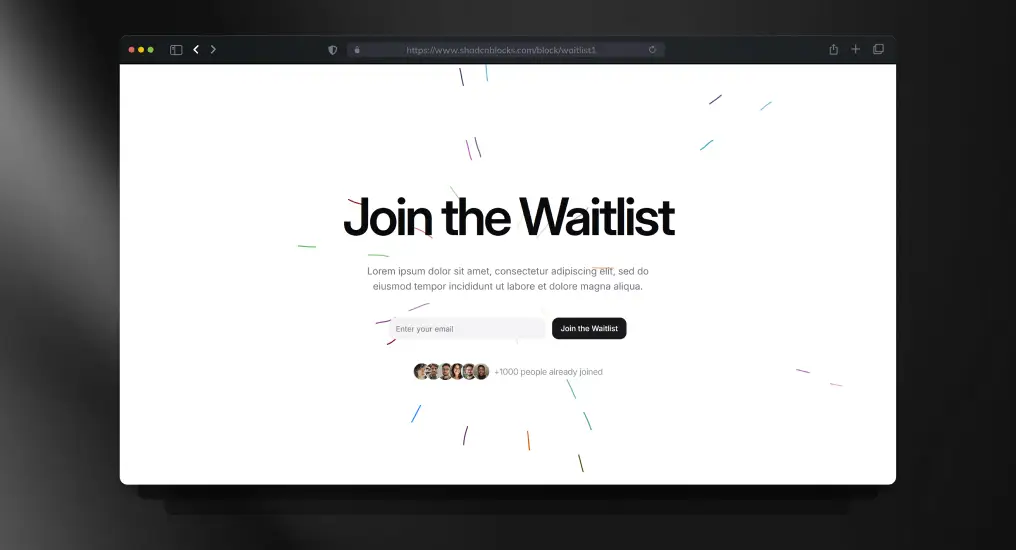
    Waitlist Block

    Waitlist Block

    A focused signup block for capturing early interest before launch. Keeps UI minimal to maximize completion rate.

    Use Cases

    • Pre-launch waitlists
    • Feature rollouts
    • Early access programs
    • Startup validation
    • Product teasers

    FAQs

    1. Are Shadcn Space blocks free to use in commercial projects?

    Yes – Shadcn Space blocks are free, open source, and can be used in both personal and commercial projects with no licensing restrictions. You can copy, modify, and ship them in production without attribution requirements.

    2. Can I customize Shadcn UI blocks after copying them?

    Absolutely. Since Shadcn UI blocks are not a locked component library, you fully own the code. You can customize layouts, styles, components, and logic using Tailwind CSS, CSS variables, or your own design system.

    3. Do Shadcn Space blocks support dark mode?

    Yes. All Shadcn UI blocks support light and dark themes using CSS variables and Tailwind’s theming patterns, making them easy to integrate with existing theme toggles.

    4. Can I install blocks via CLI?

    Absolutely – use pnpm, npm, yarn, or bun to install blocks directly.

    5. Is Figma design support available for these blocks?

    Yes. Each block includes an associated Figma preview, allowing designers and developers to collaborate more effectively between design and code.


    Final Thoughts

    Shadcn blocks from Shadcn Space provide a developer-friendly, production-ready UI foundation that accelerates design to code without lock-in. Whether you’re launching an MVP, building an admin dashboard, or scaling your SaaS UI, these blocks save hours of development time while retaining full customization control.
    Start building faster – drop in blocks, tweak styles, and ship interfaces you’re proud of. Also, if you are looking for Shadcn Templates, you can check WrapPixel.

    If you’re exploring the ecosystem further, we’ve also prepared a detailed guide on shadcn libraries to help you get started.

  • 20+ Stunning Free NextJs Website Templates for 2026

    Designing a beautiful nextjs website templates should not feel like reinventing the wheel. Time is your most valuable resource, whether you are a startup founder rushing to become an MVP or a developer balancing several projects.

    An open-source web development framework called Next.js was developed by Vercel and offers server-side and static rendering for React-based online apps.

    Developers now have access to integrated SEO benefits and an expanding toolkit thanks to Next.js.  The true game-changer?  An expanding collection of nice, free Next.js templates that are ready to be customised and used.

    We are sharing 20+ carefully chosen, free, production-ready, popular, and performance-driven templates in this blog.

    What Makes a Great Next.js Website Template?

    Free templates are not all made equal.  It’s crucial to assess a template’s quality and usefulness before you start developing your website.  When selecting a Next.js website template in 2026, keep the following points in mind:

    • Modern UI Design
    • Performance-Optimized
    • SEO-Ready
    • Reusable Components
    • Tailwind CSS or Styled Components Support
    • Clean & Scalable Code

    20+ Free NextJs Website Templates

    Nicktio

    Framework: Next.js + Tailwind CSS

    Overview: Nicktio is a stunning SaaS-focused Nextjs template designed by WrapPixel. It’s ideal for startups, tech products, and software companies wanting a bold and clean UI for their product marketing websites. Built with Tailwind and optimized for performance.

    Key Features Of Nicktio:

    • Production-ready pages: Pricing, Features, Blog
    • Built with Tailwind CSS for easy customization
    • Responsive, fast-loading, and SEO-friendly

    Next Startd

    Framework: Next.js + Tailwind CSS

    Overview: For developers that wish to begin quickly, Next Started is a clean starter template.  It is ideal for portfolios or basic landing pages because of its clean structure, pre-built routing, and minimalist appearance.

    Key Features Of Next Startd:

    • Lightweight and easy to extend
    • Simple layout with blog support
    • Ideal for MVPs and personal websites

    Homely

    Framework: Next.js + Tailwind CSS

    Overview: Homely is a modern real estate website template made with Next.js. It helps real estate agencies and property agents showcase properties in style, with a clean and user-friendly layout.

    Key Features Of Homely:

    • Property listing sections with filters
    • Modern design optimised for mobile
    • Smooth scrolling and interactive UI

    Whop

    Framework: Next.js + Tailwind CSS

    Overview: The Whop template is designed for Next.js-powered eCommerce website development.  It has user-friendly navigation, product pages, and animations that are well-structured and optimised for conversion.
    Key Features Of Whop:

    • Responsive product and checkout pages
    • Clean, modern storefront UI
    • Built-in animations with Framer Motion

    SaaSCandy

    Framework: Next.js + Tailwind CSS

    Overview: Designed specifically for SaaS firms, SaaSCandy is a sleek and incredibly responsive website template.  It is aesthetically pleasing, optimised for conversion, and simple to modify with good Tailwind CSS utility classes.
    Key Features Of SaaSCandy :

    • SEO-optimized and blazing fast
    • Includes pricing, features, and contact section
    • Designed for SaaS product marketing

    Endeavor

    Framework: Next.js + Tailwind CSS

    Overview: Endeavor is a modern charity & NGO website template built with Next.js. It’s designed for organizations that want to highlight their mission, causes, and donation campaigns with a clean and impactful layout.

    Key Features Of Endeavor:

    • Donation-focused sections with CTAs
    • Responsive design for all devices
    • Easy to showcase causes, events, and volunteer stories

    Open

    Framework: Next.js + Tailwind CSS

    Overview: Open is an beautifully designed open-source template for commercial and startup websites.  It has dark mode, stylish animations, and well-planned content organization.

    Key Features Of Open:

    • Mobile-responsive and dark mode ready
    • Developer-friendly structure
    • Smooth scroll and micro-interactions

    Studiova

    Framework: Next.js + Tailwind CSS

    Overview: A sleek and contemporary Nextjs website template designed for agencies, creative studios, and startups, is Studiova by WrapPixel.  It is a great option for client-facing websites due to its professional style, rich font, and seamless user interface components.

    Key Features Of Studiova:

    • Designed for digital agencies and freelancers
    • Sections for services, team, portfolio, and testimonials
    • Built with Tailwind, Next.js 15 & React 19 for quick styling

    Codebucks

    Framework: Next.js + Tailwind CSS

    Overview: For developers or content producers looking for a quick, SEO-friendly blog setup with modern features like Tailwind and MDX, Codebucks’ blog template is ideal.

    Key Features Of Codebucks:

    • Minimal blog layout with featured images
    • Dark mode support
    • MDX support for easy content management

    Desgy

    Framework: Next.js + Tailwind CSS

    Overview: Desgy is a creative agency template built with Next.js. It’s perfect for agencies, freelancers, and startups looking for a clean and professional site. The design is minimal, fast-loading, and easily customizable.

    Key Features Of Desgy:

    • Responsive and modern design
    • Smooth page transitions and animations
    • Easy to customise sections for portfolio and services

    Stablo

    Framework: Next.js + Tailwind CSS

    Overview: Stablo is a nicely designed magazine-style blog template for writers and bloggers with a creative bent.  With its organized post layouts and contemporary fonts, it provides a high-end feel.

    Key Features Of Stablo:

    • Grid-based blog layout with categories
    • Prebuilt post detail and author pages
    • Clean, elegant UI with modern spacing

    Sustainable

    Framework: Next.js + Tailwind CSS

    Overview: Sustainable is a clean, conversion-optimized SaaS template built with developers in mind. It’s designed to promote software products, tools, or platforms with a modern marketing site.

    Key Features Of Sustainable:

    • High-converting CTA sections
    • SEO-friendly with meta optimization
    • Designed for SaaS product showcases

    Personal

    Framework: Next.js + Tailwind CSS

    Overview: Mirsazza Hossain created this developer portfolio template, which is a modern and unique website design.  It’s ideal for uploading resumes, writing blogs, and showing projects.

    Key Features Of Personal:

    • Personal branding-ready layout
    • Projects, blog, and contact sections
    • Fully responsive and minimal design

    Crypgo

    Framework: Next.js + Tailwind CSS

    Overview: Crypgo is a crypto template made for Next.js projects. It’s built for crypto apps and blockchain startups. The template comes with sleek sections to showcase your token, team, and roadmap.

    Key Features Of Crypgo:

    • Crypto-focused layout with token sale sections
    • Responsive design with dark mode
    • Built-in animations with Framer Motion

    Linkify

    Framework: Next.js + Tailwind CSS

    Overview: For developers creating micro landing sites, personal portfolio hubs, or bio-link utilities, Linkify is a simple and quick link management user interface template.  Easy to use and very practical.

    Key Features Of Linkify:

    • Customizable user profile cards
    • Editable link management dashboard
    • Clean and mobile-friendly UI

    Awake

    Framework: Next.js + Tailwind CSS

    Overview: Awake is a visually striking portfolio template by WrapPixel designed for freelancers, creative studios, and digital agencies. It has smooth transitions and aesthetic layouts to make portfolios shine.

    Key Features Of Awake:

    • Scroll-based animations and effects
    • Clean design with beautiful font choices
    • Fully responsive and easy to customize

    Base Hub

    Framework: Next.js + Tailwind CSS

    Overview: The marketing template for Base Hub was created with speed and flexibility in mind.  For SaaS, product, or API-based tools that need scalable, clear marketing websites, it’s appropriate.

    Key Features Of Base Hub:

    • Content-focused layout for product storytelling
    • Fast loading and SEO-optimized
    • Mobile-first responsive structure

    Abdullah

    Framework: Next.js + Tailwind CSS

    Overview: This elegant and creative agency template by Abdullah is ideal for exhibiting creative teams or portfolios because it has bold font, contemporary divisions, and scroll animations.

    Key Features Of Abdullah:

    • Minimalist navigation and page layout
    • Smooth transitions and animation effects
    • Built with Tailwind for easy customization

    Property PRO

    Framework: Next.js + Tailwind CSS

    Overview: Property PRO is a feature-rich, real estate website template tailored for showcasing listings and agent profiles. It’s ideal for property management startups or realtors.

    Key Features Of Property Pro:

    • Listing cards with filters and search
    • Agent and contact pages included
    • Fully responsive property grid

    Agency

    Framework: Next.js + Tailwind CSS

    Overview: Jaume Gelabert created this clean and professional agency template specifically for small teams, freelancers, and design firms. It has functional areas for services, work, and contact together with simple aesthetics.

    Key Features Of Agency Nextjs:

    • Elegant portfolio/project showcases
    • Modular and scalable folder structure
    • Responsive design and dark mode


    Alvalens Porto

    Framework: Next.js + Tailwind CSS

    Overview: Alvalens Porto is a well-designed portfolio template with animated features and a structured layout for developers and creatives to showcase their work and personal branding.

    Key Features Of Alvalens Porto:

    • Project, About, and Blog pages
    • Clean UI with soft color palette
    • Fully mobile-responsive

    Symposium

    Framework: Next.js + Tailwind CSS

    Overview: Symposium is a well-designed SaaS landing page specifically designed for team and project management applications.  It’s perfect for new businesses who want to market their app in an understandable and eye-catching way.

    Key Features Of Symposium:

    • Sections for features, pricing, and testimonials
    • Clean CTA-driven layout
    • Fast-loading and SEO-ready

    Fyrre Magazine

    Framework: Next.js + Tailwind CSS

    Overview: For editors, content producers, and digital publications, Fyrre is an appealing magazine-style blog template.  It uses contemporary fonts and grid layouts to highlight the reading experience.

    Key Features Of Fyrre Magazine:

    • Multi-post grid layout and featured posts
    • Blog, category, and author templates
    • Typography-focused, clean design

    Venus

    Framework: Next.js + Tailwind CSS

    Overview: Venus is a free Nextjs website template with a premium style that is intended for marketing websites and SaaS applications.  Performance, versatility, and an appealing user interface are all balanced.

    Key Features Of Venus:

    • Rich hero sections and pricing tables
    • Landing, blog, and integrations pages
    • Optimized for speed and conversions

    Build Faster with These Free Nextjs Templates

    These 20+ free Next.js website templates are ideal for building landing pages, blogs, portfolios, or SaaS sites in 2026 as they have beautiful designs, clear code, and developer-friendly architectures.  Build easily, start responsibly, and effortlessly customize.

    You can also explore templates in other frameworks, including options similar to a free React website template.